I have been thinking about this question a lot lately. Not academically — but in the way you think about something when you’ve been spending more time in good rooms than usual, noticing what works and what doesn’t, what makes you want to stay and what makes you reach for your coat after one drink.
A great bar room is not simply a place that serves good drinks. That is the entry requirement, not the distinction. The bars worth talking about — the ones that earn a standing reservation in your rotation — are doing something considerably more complex. They are creating a world. And like all well-constructed worlds, the best ones make you forget, for a little while, that there is any other one.
Here is what I have come to understand about what separates a great bar room from a merely competent one.
It Has a Point of View
The bars I return to again and again have committed to something. A spirit, a region, a philosophy, an era. They are not trying to be everything to everyone. They have made a choice and they are living inside it fully.
The whiskey bar that has made peace with the fact that it will never serve a frozen margarita. The gin bar with a thousand expressions and a staff that can tell you exactly why one is better on a Tuesday evening in spring. The wine bar that knows its producers by name and can tell you what the weather was doing in Burgundy in 2019.
This specificity is not pretension — it is respect. For the craft, for the ingredient, for the person on the other side of the bar who came in wanting to learn something or simply to be in the company of people who care about what they’re pouring.
The Ivory Peacock in the Flatiron district is the most committed expression of this philosophy I have encountered in New York. The second largest gin collection in the world — over 1,000 labels from more than 50 countries — housed in a room adorned with original Louis XIV antique mirrors and chandeliers, with a speakeasy below and a French-Japanese kitchen that treats its bar bites as seriously as a proper restaurant. The Emerald Bar, a 17-seat horseshoe of marble, is where you go when you want the gin bar experience in its most concentrated form. It is a room that made a choice and has never looked back.
The Gotham Lounge inside The Peninsula New York is the classic hotel bar at its most atmospheric. Named for the building’s original identity — it opened in 1905 as The Gotham Hotel — the room carries that history in every detail. Keith Haring works on the walls, dramatic blue curtains, a grand piano that on weekend evenings fills the room with live music, and a cocktail collection built around the decades that shaped New York nightlife. It does not try to be contemporary. It does not need to. It is a room that knows exactly what chapter of the city it belongs to, and it wears that knowledge beautifully.
The Bar Bites Have Grown Up
This is the shift I am most grateful for and perhaps most personally invested in. There was a time — not so long ago — when ordering food at a bar meant choosing between chicken tenders, a basket of fries, or a platter of sliders that arrived looking apologetic. It was sustenance, not cuisine. It was the thing you ordered to stay upright, not the thing you looked forward to.
That era is over. And its ending has made bars more interesting, more complete, and considerably more worth an evening.
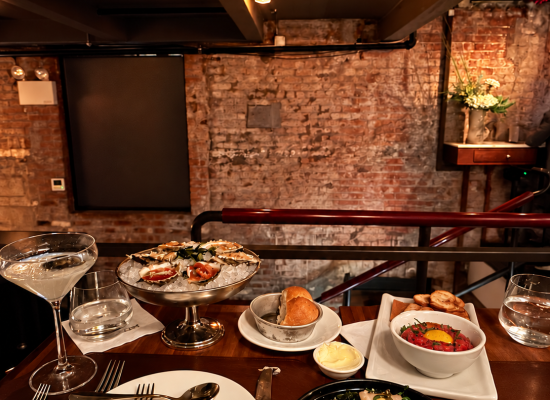
The Tusk Bar at the Evelyn Hotel in NoMad is perhaps the best example in the city of what this shift looks like fully realized. A classic cocktail and oyster bar in a glamorous Art Deco space, named one of America’s best bars by Esquire, with a seafood-driven small plates menu and a program that marries timeless elegance with what they call free-wheeling flair. The oysters are as considered as the cocktails. The small plates — the kind of food you actually want alongside a perfectly made drink — are part of the point, not an afterthought.
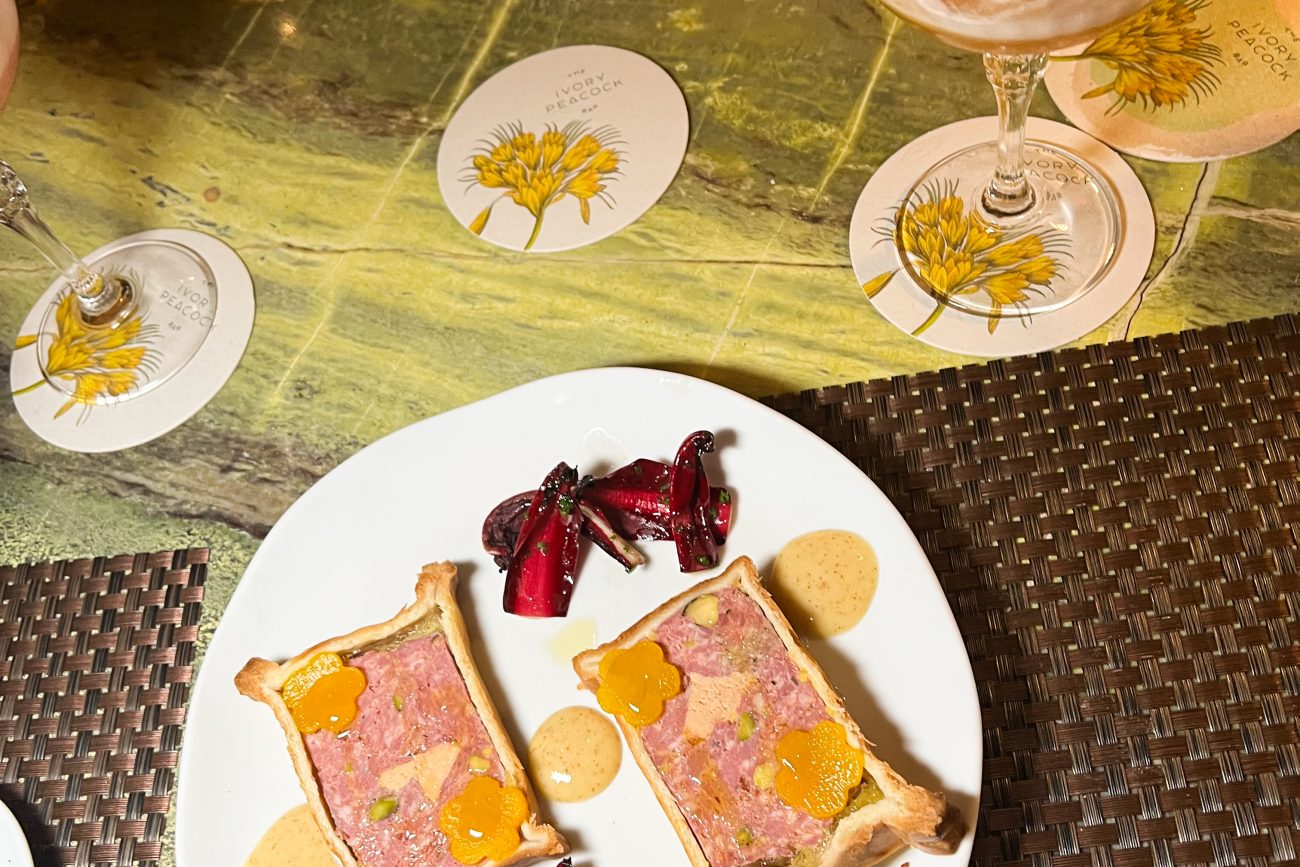
The Ivory Peacock carries the same philosophy into its kitchen, surprising guests with a French-Japanese bar food program that runs from tuna tartare and steak frites to a raw bar. The food at these rooms is a statement: this is not a transaction. This is an evening.
What this shift represents is a broader maturation of bar culture — an understanding that the experience of drinking well is inseparable from the experience of eating well. A great bar now treats the bar bite as a culinary statement.
The Aesthetic Does Real Work
A chic room is not a superficial thing. In a bar, the aesthetic is part of the experience in a way that is more direct and more physical than in almost any other setting.
You feel a great room before you understand it. The quality of the light — low, warm, flattering, unhurried. The materials — leather, dark wood, marble, things that absorb rather than reflect. The acoustic texture — ambient enough to feel alive, controlled enough that you can hear the person across from you. The seating that holds you rather than perches you. All of this works on your nervous system before you have taken a sip of anything.
The bars that understand this know that the aesthetic is not decoration. It is the architecture of a mood.
The Ivory Peacock discovered a painted peacock behind its walls during renovation — and the white peacock, a symbol of good fortune in certain cultures, became the bar’s founding image. That origin story is visible in every surface of the room. The Louis XIV mirrors, the chandeliers, the peacock wallpaper in the restrooms that guests keep mentioning in their reviews. These details are not random. They are the expression of a room that knows who it is.
Dear Irving in takes the aesthetic commitment in a different direction — a time-travel concept, period-specific rooms, the sense of arriving somewhere that is not quite 2026. It is the kind of bar where the design does as much work as the bartenders, and the bartenders do considerable work.
The Staff Knows Things — and Wants to Share Them
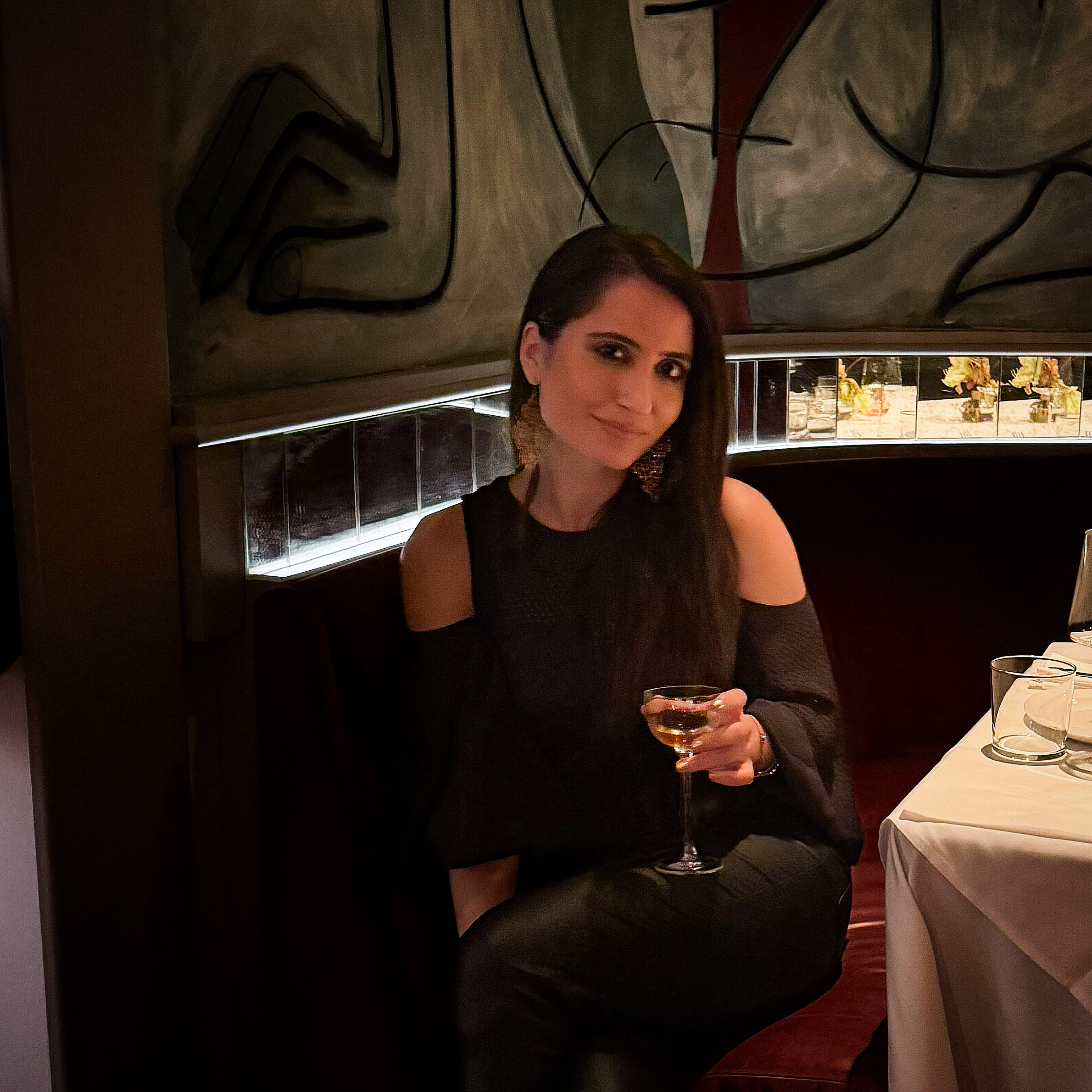
The best bar experiences I have had in this city share one quality that has nothing to do with the drink itself: the person making it wanted to tell me about it.
Not performatively. Not with the slightly exhausting energy of someone who needs you to appreciate them. But with the quiet enthusiasm of someone who finds their subject genuinely interesting and assumes, generously, that you might too.
This is what separates a bar with a point of view from a bar that has merely committed to a theme. The theme can be beautiful and the drinks can be technically perfect, but if the person behind the stick doesn’t care — if the knowledge stops at the menu description — something essential is missing.
The staff at The Ivory Peacock is specifically trained in their global gin collection — they can tell you which expression to choose based on your preferences and what food pairing makes sense alongside it. That knowledge, worn lightly and shared genuinely, is what makes a bar feel like an experience rather than a transaction.
The Gotham Lounge understands a related but distinct version of this. The service standard is not informational so much as atmospheric — the kind of presence that lets the room do its work, that knows when to appear and when to disappear. The piano plays. The Keith Haring watches. The bartender arrives exactly when needed.
The Archetypes Worth Knowing
New York’s bar landscape is too varied to reduce to a single ideal. Part of developing real taste in this city is understanding which archetype you’re walking into — and what each one asks of you.
The Craft Cocktail Sanctuary: Apotheke, Nolita Apotheke is the antidote to the scene bar in every possible way. Dark, deliberate, the bartender as chemist — working with house-made bitters, botanical infusions, and combinations that take time and reward patience. There are no shortcuts here and no interest in performing accessibility. You go to Apotheke to taste something genuinely unusual, in a room that has earned the right to ask for your full attention. The experience is quiet in the way that precision is always quiet. I find it one of the most focused drinking experiences in the city.
The Hidden Room: Angel’s Share, East Village No signage. No large groups. No standing. The rules at Angel’s Share feel strict until you understand what they are protecting — the quality of attention that a great cocktail deserves and rarely receives. Hidden above a Japanese restaurant on the second floor of a building on Stuyvesant Street, Angel’s Share has been operating on its own terms since 1994. The Japanese whisky selection is exceptional, the cocktails are precise, and the room is exactly the size it needs to be. It is what happens when a bar decides that the drink matters more than the crowd.
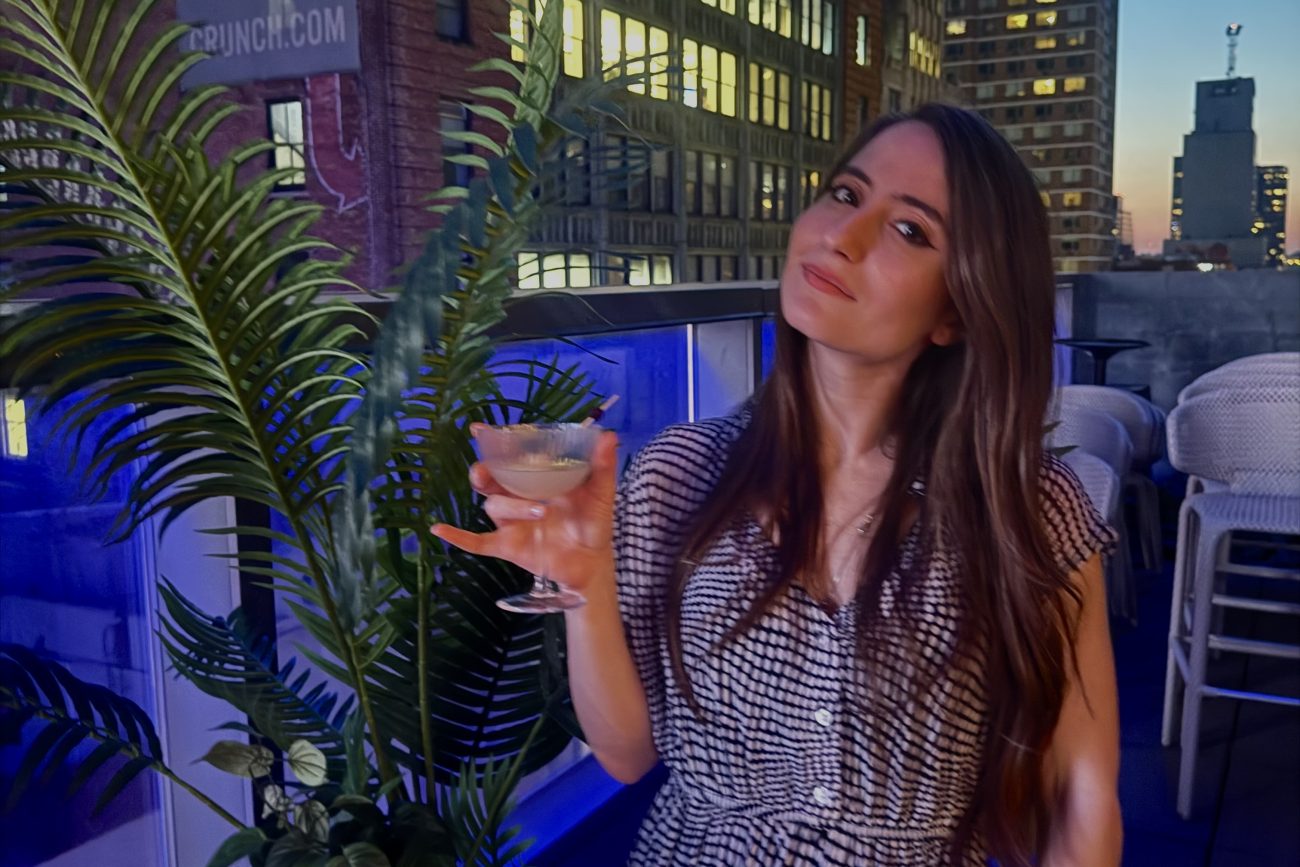
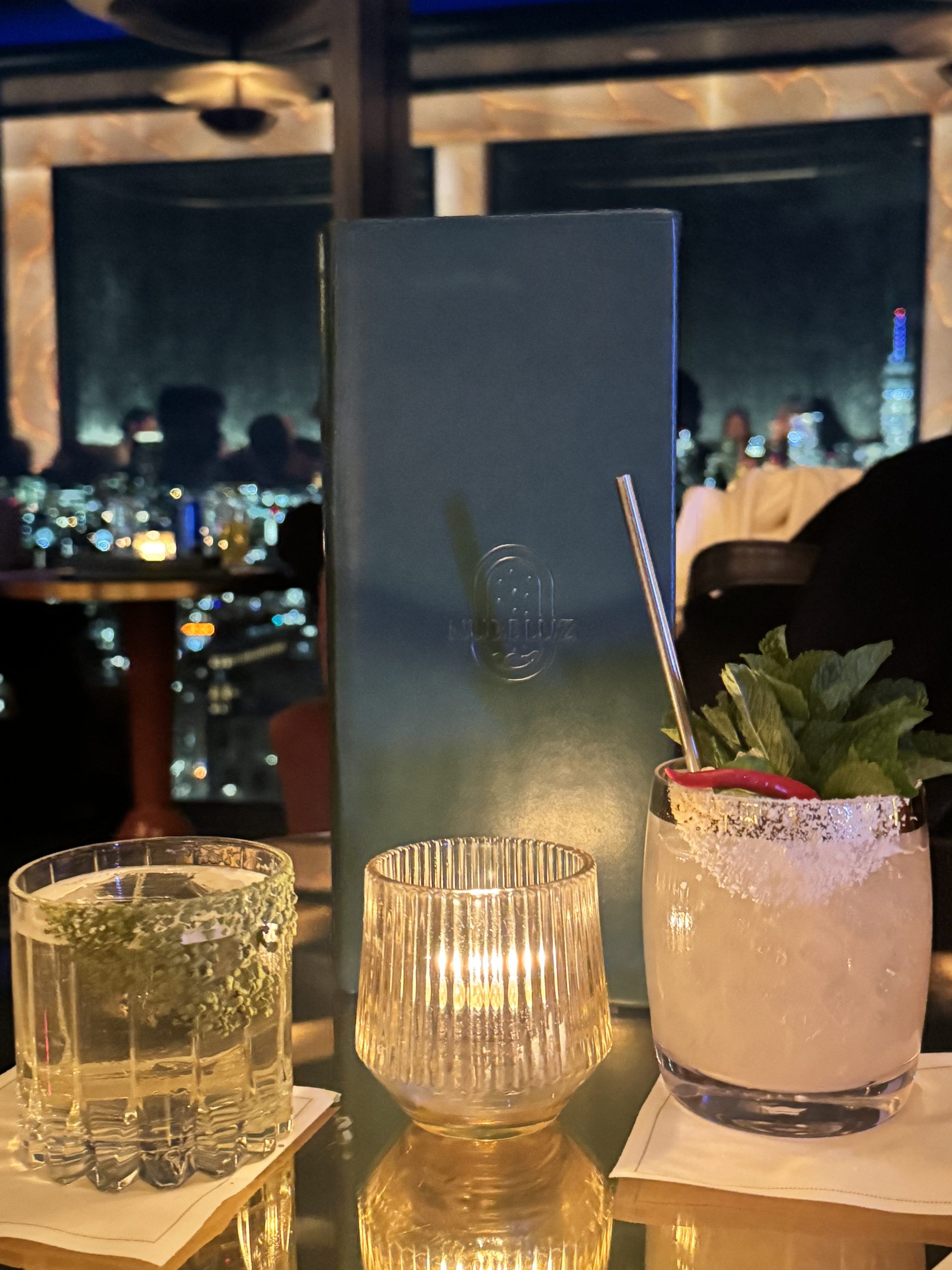
The Glamorous Rooftop: Nubeluz at The Ritz-Carlton NoMad + PEAK at 30 Hudson Yards These are two different expressions of the same proposition — that elevation is its own form of hospitality. Nubeluz by José Andrés sits on the 50th floor of the Ritz-Carlton in NoMad, a lightbox in the sky named for the Spanish words for cloud and light. The 270-degree views of the Manhattan skyline are the obvious draw, but the cocktail program holds its own — the Foggy Hill Negroni arrives with a fragrant cloud of smoke made from leftover citrus peels and thyme. The room has a dress code and means it. PEAK at 30 Hudson Yards takes a more architectural approach — the Hudson River on one side, the city grid on the other, the building itself as the statement. Both rooms understand something that ground-floor bars sometimes forget: at a certain height, the city becomes part of the drink. You are not just ordering a cocktail. You are ordering a perspective.
It Knows How to Hold Time
The final quality of a great bar room is the hardest to name and the most important. It is a quality of time.
A truly great bar slows things down. Not because it is sleepy or dull — but because it creates a space in which the conversation you’re having, the drink in your hand, the light and the music and the particular quality of the evening feel worth being present for. You stop calculating the hour. You stop reaching for your phone. You stop performing whatever version of yourself you brought in the door.
A great room makes you want to stay. Not for another drink necessarily — but for more of whatever it is the room is doing to time. The Tusk Bar’s Instagram says it best in the simplest possible terms: “a bar room, play it loose.” That looseness — earned, designed, intentional — is exactly what the best rooms achieve.
You know it when you’re in it. You feel the difference between a bar that is technically correct and a room that is doing something to you. Once you have felt it, you stop accepting the alternative.