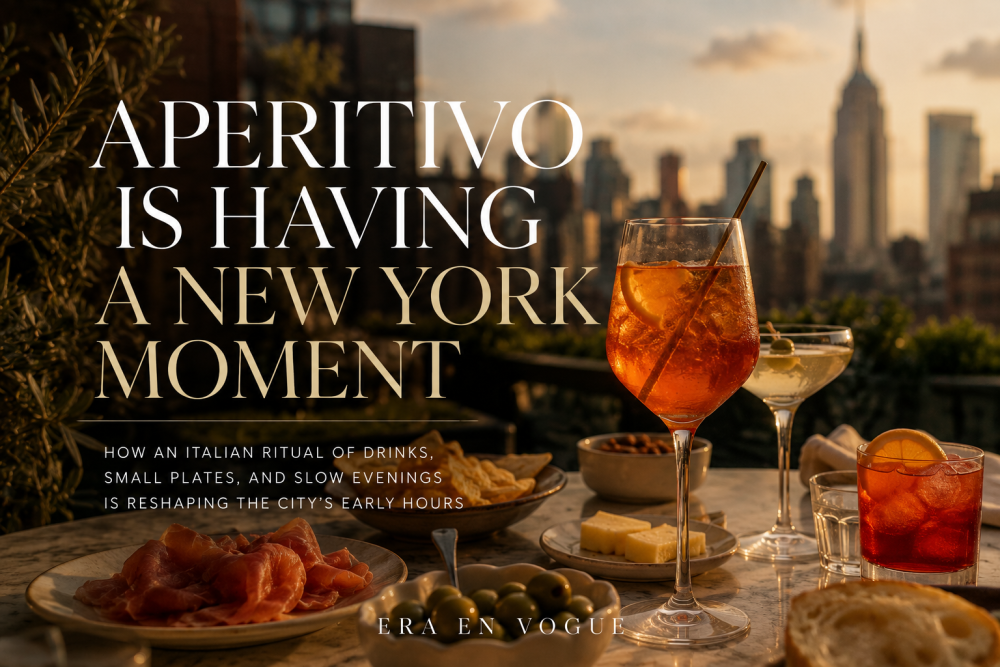
There is a version of the evening that Italians have understood for centuries and Americans have spent decades trying to rush past.
It happens in that golden hour between the end of the workday and the beginning of dinner—a glass of something bitter and sparkling, a small plate of something salty, a table where the conversation has nowhere else to be. No main course is coming for a while. No one is checking the time. The ritual is the point.
This is aperitivo. And in New York, it feels newly essential—not as a novelty, not as a happy-hour rebranding exercise, but as a ritual the city finally seems ready to understand.
Why Now
The timing makes sense when you consider what aperitivo actually does. It creates a threshold—a deliberate pause between the pace of the day and the pleasure of the evening. It asks you to decelerate before you have even sat down to dinner. In a city that has historically treated the pre-dinner hour as dead time to power through, that invitation feels almost radical.
After years of optimization culture, working dinners, desk lunches and the erosion of any real boundary between productivity and rest, people are hungry for the ritual.
Not the cocktail hour as a networking vehicle. Not happy hour as a budget hack. Aperitivo as a genuine European import—something that slows the pace before the first proper bite.
It is not really about the drink. It is about the intention behind it: choosing to mark the transition between work and the rest of the evening rather than rushing straight through it.
What You’re Drinking
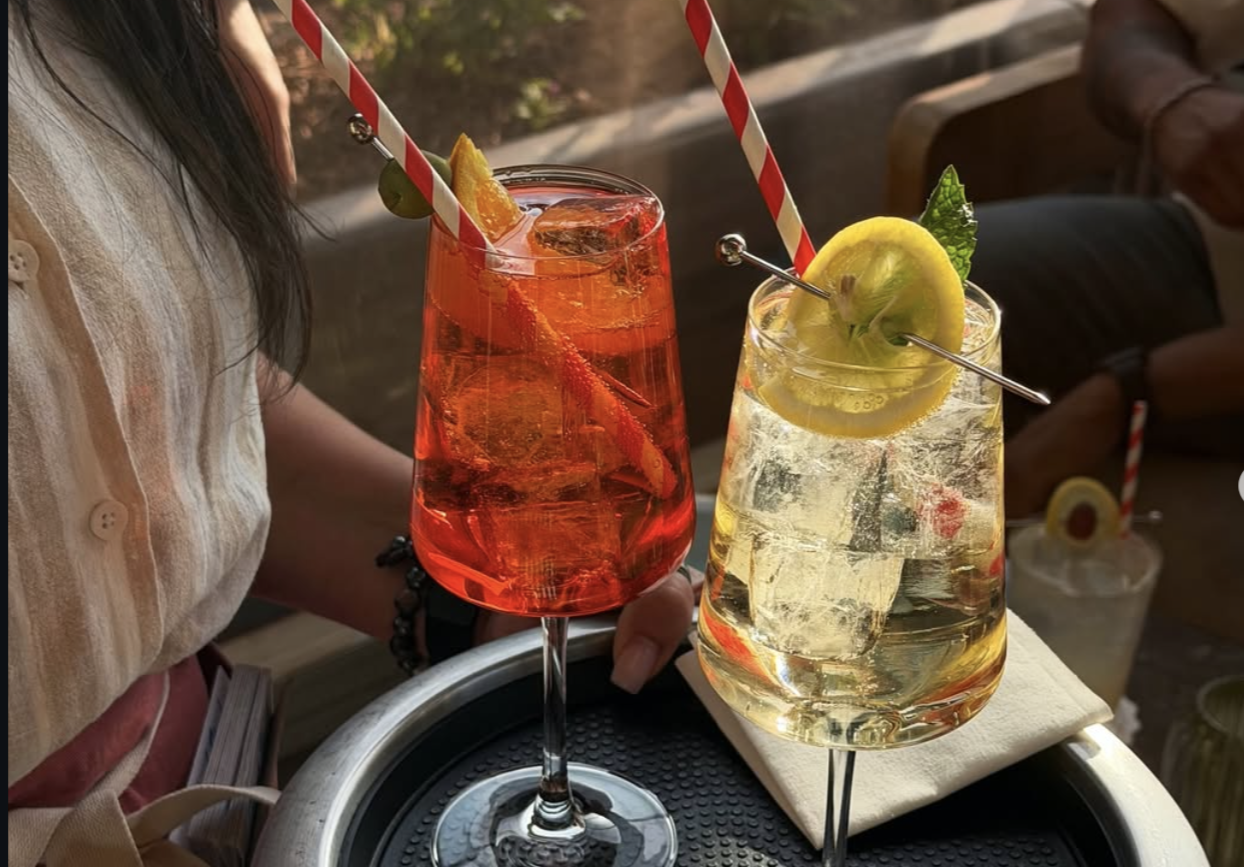
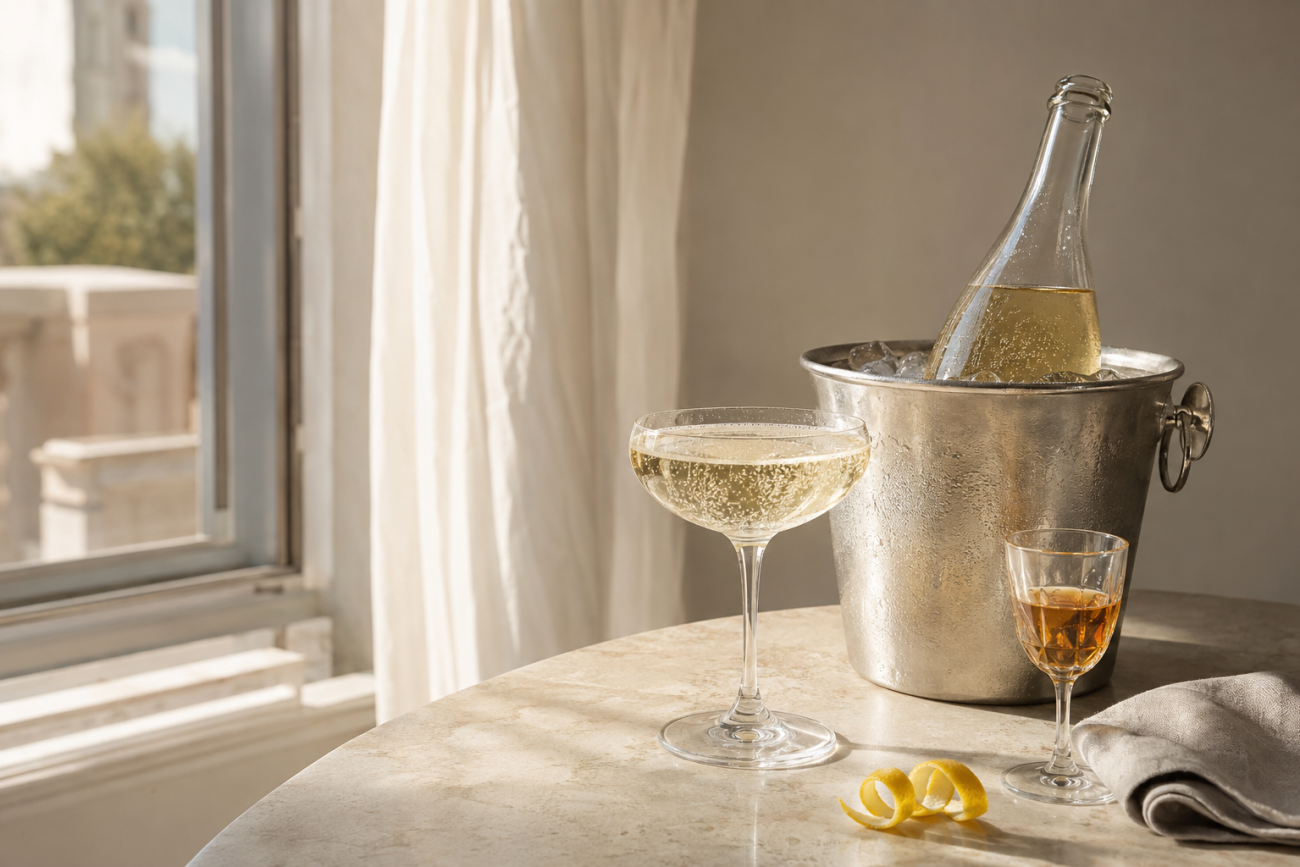
The aperitivo canon is bitter, sparkling and deliberately lower-proof.
The Aperol Spritz remains the familiar entry point, and for good reason. The Negroni offers something deeper and more structured, while the Sbagliato swaps gin for Prosecco for a lighter, more session-friendly variation. Amaro and vermouth may be served simply over ice. Then there is the Sgroppino, a Venetian classic of lemon sorbet, Prosecco and vodka that sits somewhere between aperitivo and dessert.
The food is equally considered: olives, anchovies, crostini, tramezzini, arancini and cicchetti. Small bites designed to open the appetite rather than satisfy it.
Aperitivo is not dinner.
That is the whole point.
The NYC Edit: Spots to Watch
Here is where the city’s aperitivo moment is taking shape—the concepts and openings putting real weight behind the ritual.
Bar Pisellino — West Village
From the team behind Via Carota and I Sodi, Bar Pisellino draws on the classic Italian all-day bar: a curved marble counter, standing-room service al banco, and a menu that moves from espresso and pastries to cocktails, wine and spuntini.
Dante Aperitivo — West Village
The newest concept from the Dante team is built specifically around the aperitivo hour, with world-class aperitivo cocktails and raw-bar service at its Bank Street location.
Leonessa — Conrad New York Downtown
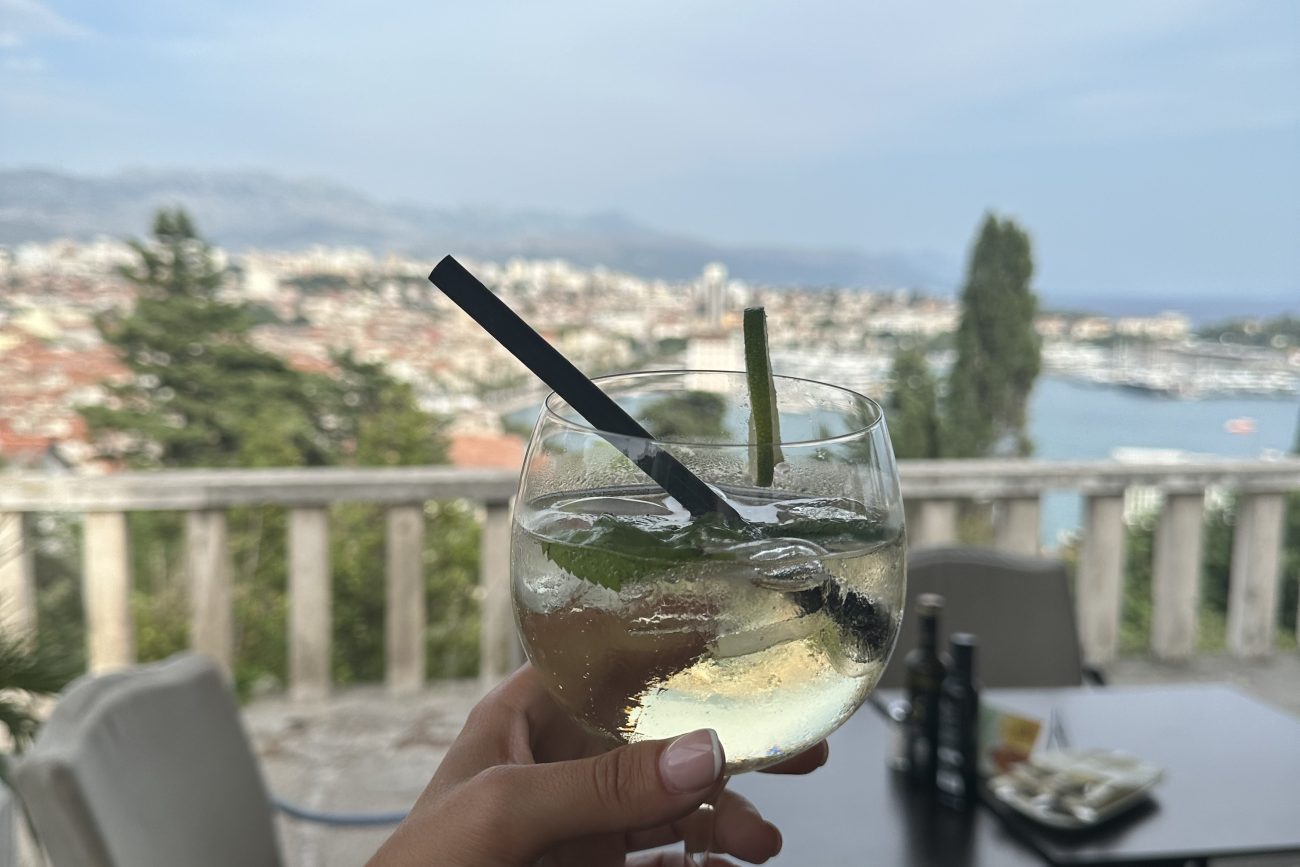
A rooftop interpretation of Italian aperitivo culture overlooking the Hudson River and Lower Manhattan, Leonessa serves spritzes, bitter-forward cocktails, a Sgroppino and a rotating selection of complimentary aperitivo-style snacks with the first round.
Felice on Hudson — West Village
Modeled on the atmosphere of a traditional Italian enoteca, Felice places regional Italian wines, classic cocktails, Negronis and small plates at the center of an experience designed for lingering.
Cecconi’s — DUMBO
With Italian cocktails, cicchetti, pizzettas and Manhattan skyline views, Cecconi’s offers a particularly scenic setting for embracing the pre-dinner ritual.
The Broader Point
What aperitivo offers that happy hour never could is a philosophy rather than a price point
It is not about getting a deal on drinks before 7 p.m. It is about choosing, deliberately, to mark the transition between effort and pleasure—to acknowledge that the evening deserves a threshold.
In a culture that has made leisure feel like another form of productivity, that small act of ritual feels quietly significant.
The Italians understood this centuries ago. New York may have arrived later, but it seems to be embracing the tradition for the right reasons.
And perhaps that is what makes aperitivo feel so relevant right now: not because it is new, but because we have finally remembered why the pause matters.