Vis Island has been named one of Croatia’s top destinations for 2026 — and if you’ve been paying attention to the Dalmatian coast for any length of time, that news lands somewhere between vindication and mild alarm.
Intrepid Travel placed Vis on their Hot List for 2026, positioning it explicitly as the answer to the overcrowding that has overtaken Hvar and Dubrovnik. Travel press is catching up. Search interest is rising. The window of visiting Vis before it fully crosses over into mainstream consciousness is narrowing in a way it never has before.
I’ve been to Vis. I’ve taken the ferry from Split, walked the harbor at Vis Town in the early morning, swum at Stiniva before the boat tours arrived [I wrote about that experience in detail last year — if you want the firsthand account of the Blue Cave, Komiza, and what the island actually feels like, start there.]
This piece is different. This is the planning guide — what to know strategically before you go in 2026, when the island is more searched than it has ever been.
Why Vis Is Having Its Moment Right Now
The story of Vis is inseparable from its unusual history. The island was closed to foreign tourists until 1989, functioning as a Yugoslavian military base while the rest of the Adriatic coast developed around it. Four decades of restricted access meant no resort infrastructure, no club strips, no waterpark — and when Vis finally opened, the world of mass tourism had already moved on to Hvar and Dubrovnik.
That accident of history created the island that travelers are now actively seeking out. In 2026, with overtourism a genuine crisis at Croatia’s most famous destinations, Vis represents something rare: an island that is genuinely beautiful and genuinely still itself.
New hiking and cycling trails are opening this year. A new museum is in development. The infrastructure is quietly expanding — which means the version of Vis available right now is both more accessible than it has been and less crowded than it is about to become.
In the same way travelers moved from Mykonos to Paros or Tulum to Bacalar, Vis is emerging as the next “before everyone else finds it” destination.
Search interest is rising. Major travel publications are starting to highlight it. Infrastructure is expanding quietly. And travelers are increasingly looking for places that still feel local rather than fully optimized for tourism.
Vis vs Hvar: Which Island Is Right for You
This is the question every traveler planning a Dalmatian coast trip is asking right now, and it deserves a direct answer.
Choose Hvar if: you want range, energy, and options. Hvar is larger, more connected, and offers everything from polished harbor restaurants to lavender fields to the Pakleni Islands just offshore. It has a deserved reputation for nightlife in high season, but Stari Grad and Jelsa offer a completely different, quieter version of the island. Hvar in shoulder season — May or September — is genuinely excellent and significantly underrated.
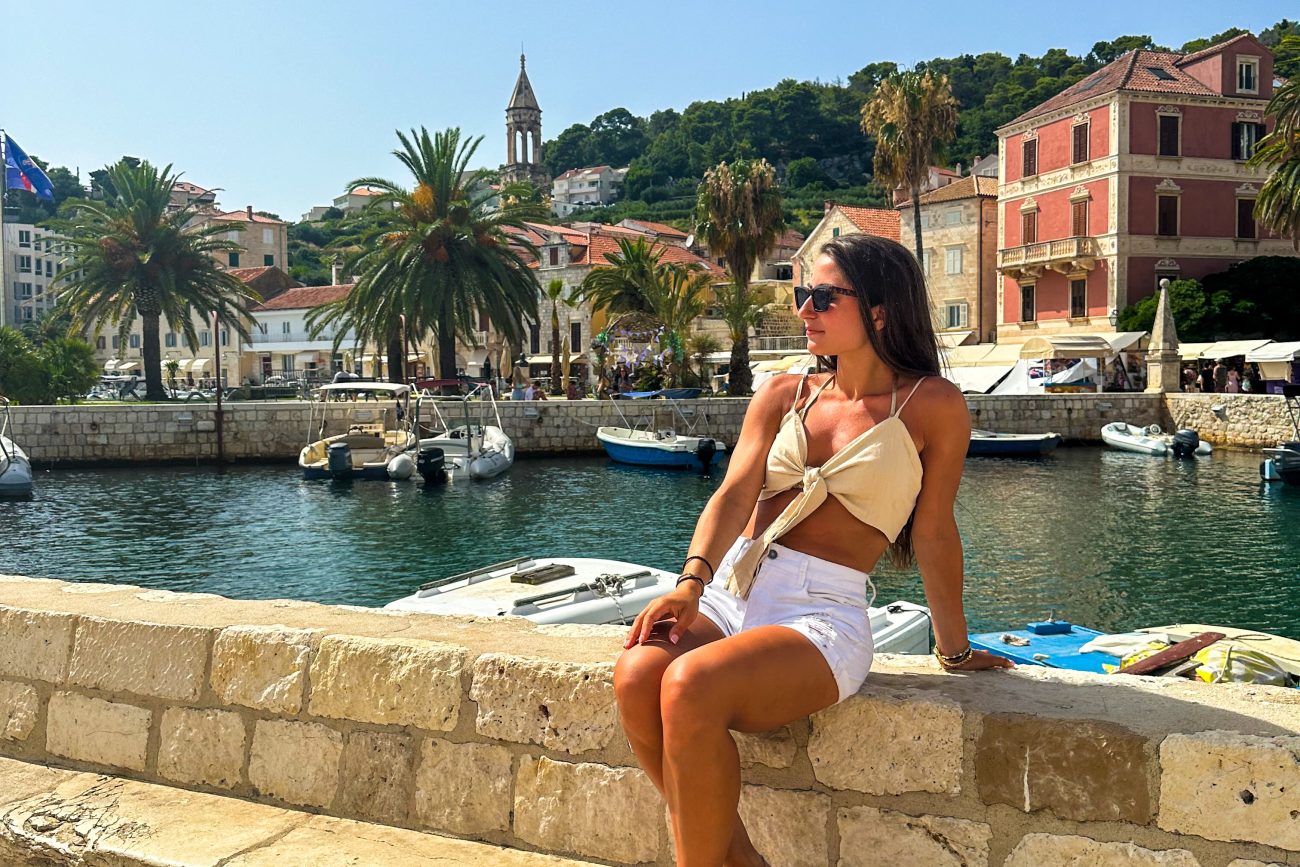
Choose Vis if: you want the island that Hvar used to be before everyone knew about it. Vis is quieter, more authentic, more demanding of your attention and patience. The konobas are better. The wine is more interesting. The beaches require more effort to reach and reward that effort completely. You will not find a party here. You will find the Mediterranean as it used to be.
The honest answer for most travelers: if you’re island-hopping and have time for both, do both — Vis as your base for two to three nights, Hvar as a day trip or final stop before Split. The ferry connection between the two is limited in shoulder season (you’ll often route back through Split), so plan accordingly.
Things to Do on Vis Island in 2026
Stiniva Beach
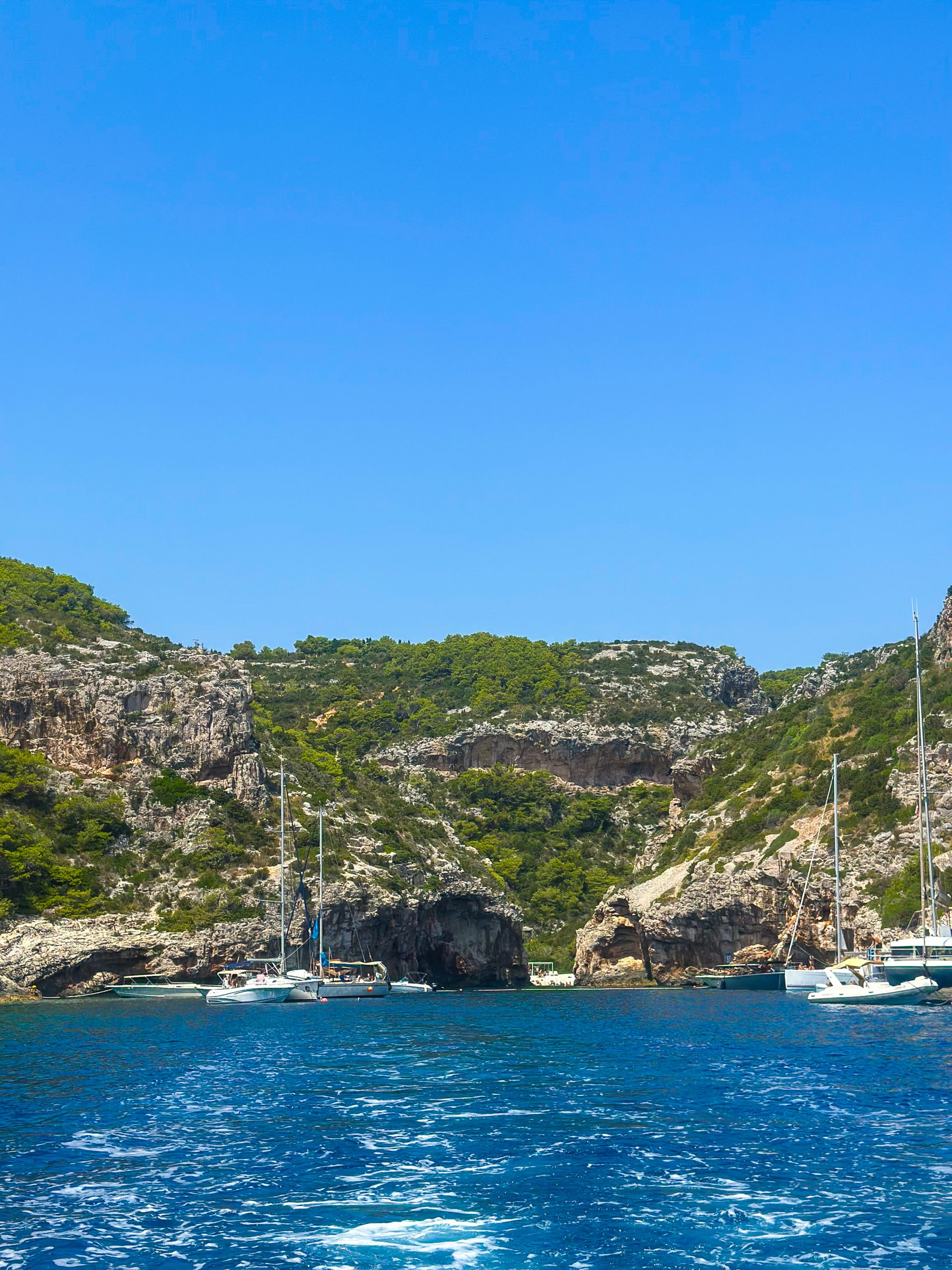
Stiniva is the most searched beach in Croatia for good reason — it is one of the most visually extraordinary coves in Europe, tucked between two towering limestone cliffs with an entrance so narrow it’s almost invisible from the water. Inside: a crescent of pebbles and water so clear it reads turquoise even on overcast days.
The practical note for 2026: Stiniva was already getting crowded by high summer in previous years. Go before 10am. Get there by hiking the trail from above rather than arriving by boat — the descent takes about twenty minutes and the view on the way down is part of the experience. In shoulder season you’ll have it largely to yourself.
The Blue Cave (Modra Špilja), Biševo Island
The Blue Cave on the nearby island of Biševo is one of Croatia’s most iconic natural sites — a sea cave that glows an otherworldly electric blue when sunlight enters through an underwater opening around midday. Boat tours depart from Komiža on the western shore of Vis.
I went into significant detail on the Blue Cave experience — including what the tour is actually like and how to time it — in my original Vis piece. Read that before booking.
The key practical point: arrive at the cave before 11am. The light effect depends on sun angle and the queues build fast in season.
Palmizana and the Pakleni Islands
Just off the coast of Hvar but spiritually aligned with Vis, Palmizana is accessible by water taxi and delivers pine forest, private coves, and a restaurant that has been feeding people well for decades. If you’re using Vis as your base for island-hopping, a day to Palmizana via Hvar is the natural extension.

Vis Town and Komiža
The island has two distinct towns with different personalities. Vis Town on the eastern shore is quieter, more aristocratic — Venetian-era architecture lining the harbor, ancient Greek ruins of Issa beneath the streets, a pace that rewards wandering without agenda. Komiža on the west is a fishing village at heart: more working, less posed, the departure point for Blue Cave tours and a base for exploring the island’s western coves.
Tito’s Cave
Less visited but genuinely worth it: the cave in the hills above Komiža where Marshal Tito coordinated the Yugoslav resistance with the Allies during World War II. Vis was the only part of Croatia not occupied by the Nazis. The cave is surprisingly ordinary. That’s what makes it remarkable.
What to Drink on Vis
Vis has been making wine since the ancient Greeks settled here, and the island has two grape varieties found essentially nowhere else: vugava, a white wine that is dry, mineral, and faintly floral — and plavac mali, a red grown in the local style, lighter than the Pelješac peninsula versions, meant for fish rather than meat. Order both. You’re on the island.
Where to Eat
The best eating on Vis is in the konobas — small family-run tavernas that look like nothing from the outside and are everything inside. Konoba Bako in Komiža is consistently cited as one of the best konobas in all of Croatia. The menu is short, the fish is whatever was caught, the bread arrives before anything else and is always correct.
In Vis Town: walk one street back from the harbor. Prices drop, quality goes up.
When to Visit Vis in 2026
May and early June, or September through early October. Not July and August unless you have no flexibility — and if you do go in high season, base yourself in Komiža rather than Vis Town, visit Stiniva on weekdays before 9am, and manage expectations around solitude.
Shoulder season Vis — quiet harbors, konobas with tables, Stiniva with no one else on the pebbles, vugava cold at sunset — is the real thing. It’s also when the 2026 trending moment makes the most sense to visit: you get the island while search interest is rising but crowds haven’t followed yet.
Getting to Vis Island
Ferry from Split: 1.5 to 2.5 hours depending on whether you take the catamaran or the car ferry. High season runs three to four departures daily; shoulder season schedules thin, so check in advance. Book accommodation early — Vis has limited beds and the good ones fill well before the ferry schedules become relevant.
The Bottom Line on Vis in 2026
Vis is trending for the right reasons. It is genuinely one of the most beautiful and most authentic islands in the Adriatic, and the travel industry has finally said so publicly. That recognition is both deserved and slightly bittersweet — because the version of Vis that exists right now, in this window, is more accessible than it’s ever been and less crowded than it’s about to become.
Go this year. Go in May or September. Go with time to stay.
Vis is moderately priced compared to Hvar. Accommodation can become expensive in peak season because inventory is limited, but food and local experiences still feel more reasonable than Croatia’s more developed islands.
Two to three days is ideal. Enough time to explore Vis Town, Komiža, Stiniva Beach, and the Blue Cave without rushing.
Technically yes from Split, but it’s better experienced slowly. Staying overnight changes the experience entirely.
Yes — especially in shoulder season. Timing matters, though: earlier tours tend to be calmer and offer the best light conditions.
Have you been to Vis? Planning to go? Find me on Instagram @angelica_e — I’m always curious what brings people to the less obvious places.
For the full firsthand account of what it actually feels like to be on Vis — the Blue Cave, Komiza harbor at dusk, the ferry ride in — read my original Vis piece here.