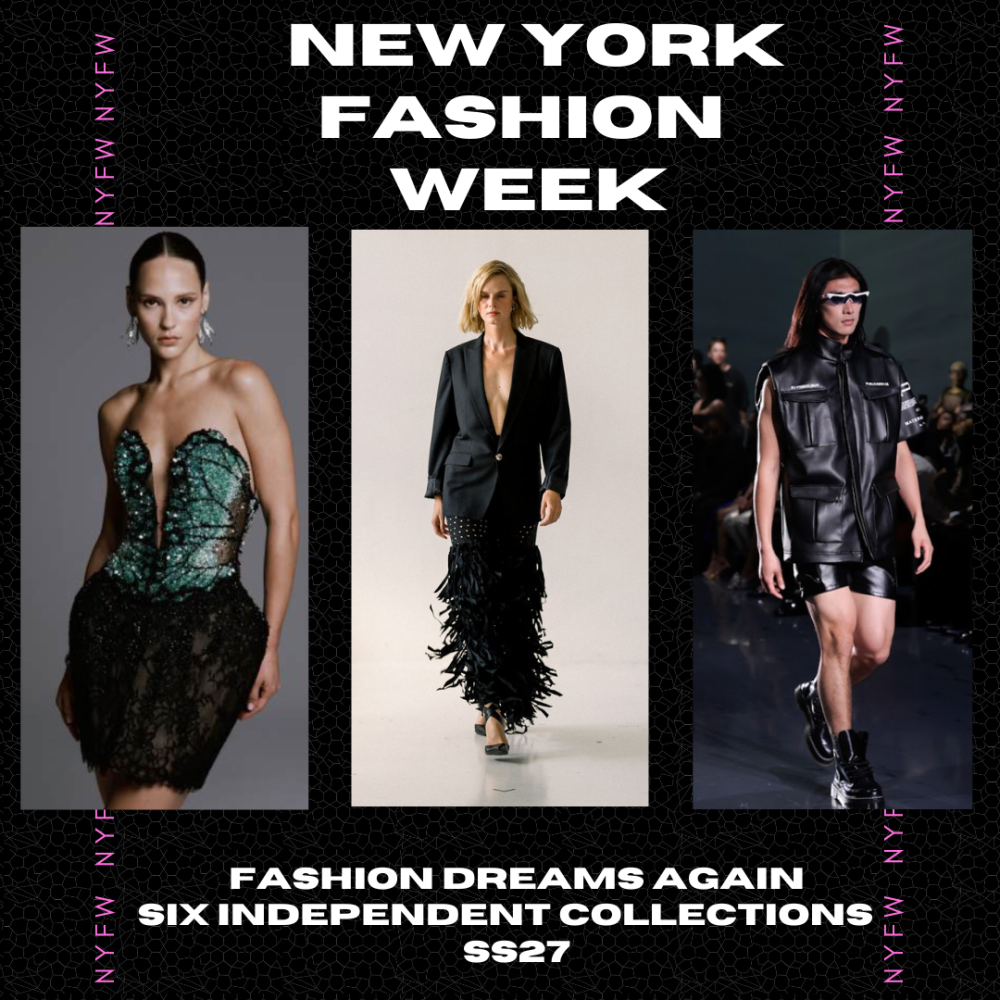
There is always an element of fantasy to fashion week. It is built into the setting: the transformed rooms, the compressed schedules, the promise that for a few minutes an entirely new world can be made convincing. But this season, the most resonant dreams were not exercises in escape. They were calls to participate.
Across the independent Spring/Summer 2027 collections I encountered in New York, designers returned to a surprisingly consistent question: What does it take to make an idea real? The answer was not blind optimism. It was persistence, discernment, community and the willingness to keep moving through uncertainty.
For some, the dream was named outright. RYNSHU presented Living a Million DREAMS; BiCoastal called its collection The Impossible Dream. Elsewhere, the idea appeared through clothes designed to protect individuality from noise, through casting that widened the image of who fashion is for, and through eveningwear committed to the transformative power of beauty.
Together, these collections offered a more interesting portrait of the American dream than the familiar story of instant arrival. Here, the dream was less about having made it than choosing—repeatedly—to continue.
RYNSHU: A Dream Put Into Motion
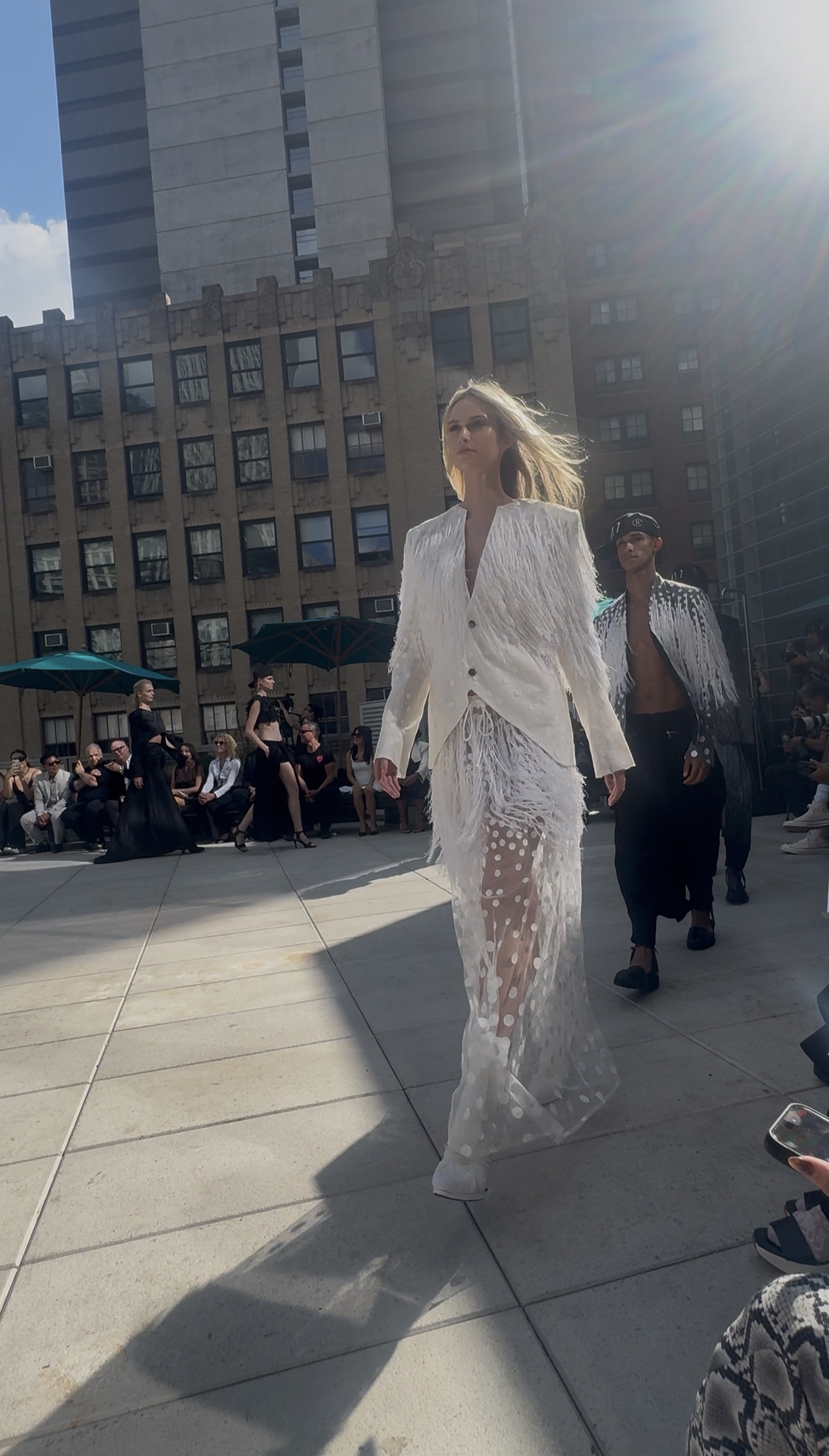
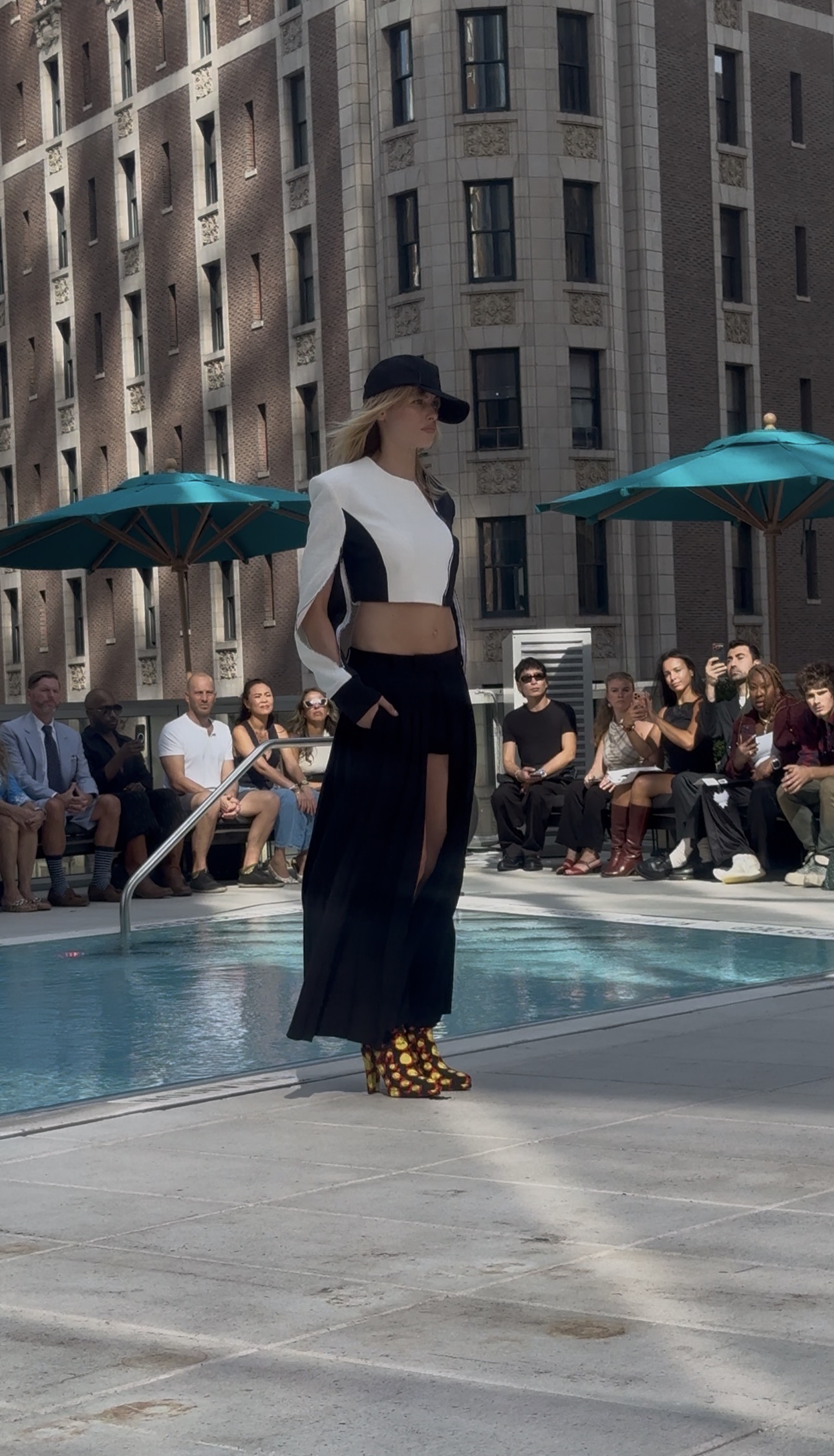
At RYNSHU, dreaming came with a challenge. Living a Million DREAMS, created by Rynshu and Rieco Yamaji, asked a direct question: Will we allow a dream to remain a dream, or take the action required to bring it into the world?
It was a fitting premise for a collection shown on the terrace of Virgin Hotels New York City, with the Empire State Building rising above the runway. New York was more than a backdrop; it was part of the story. The city’s constant movement between old and new came through in clothes that felt futuristic while retaining an unmistakable sense of New York polish.
I particularly loved the black-and-white motifs, which were graphic, chic and surprisingly versatile. Lustrous satin brought light to the collection, while distressed black jacquard, white fringe, intricate stitching and dimensional floral work gave the darker pieces depth and movement. The tailoring remained sharp without feeling rigid: relaxed blousons, curved shirt silhouettes, sarouel trousers and collarless jackets all moved easily across categories and gender.
The blazers with slashed sleeves were a standout. They opened around the body almost like capes, creating drama through movement rather than excess. It was one of the collection’s most memorable ideas and a detail that felt especially current as cape-like construction continues to emerge across fashion.
That versatility extended throughout the runway. Mini and long lengths, outerwear, separates and more embellished pieces were presented without being confined to one kind of wearer. The collection felt inclusive because freedom was built directly into the clothes.
With a soundtrack centered on pursuing one’s dreams and the New York skyline framing the runway, the presentation felt unusually connected to its message. It acknowledged that ambition is rarely linear—the route can include detours, doubts and moments of beginning again. What matters is deciding that the dream will not remain abstract.
BiCoastal: Making the Impossible Personal
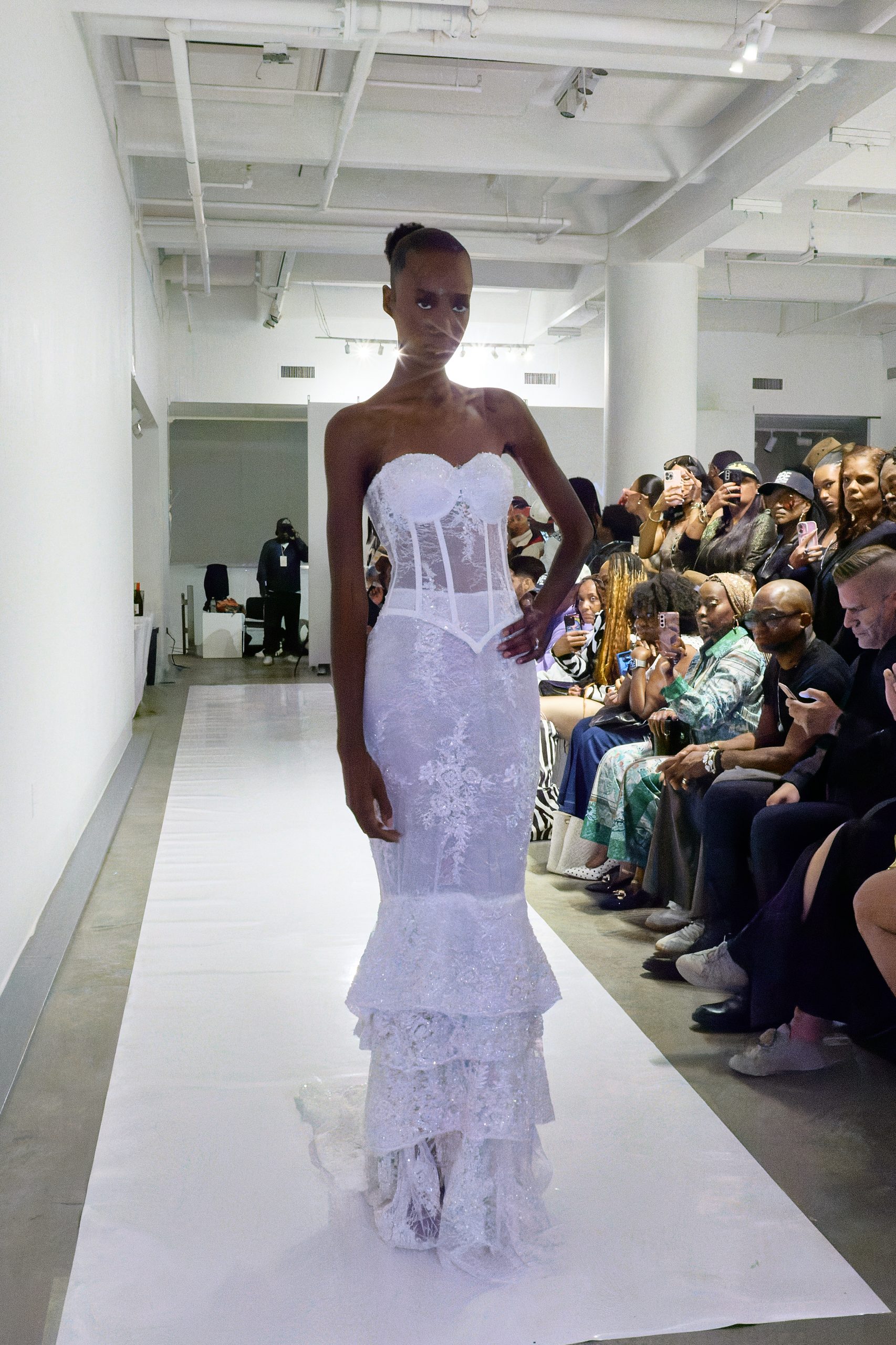
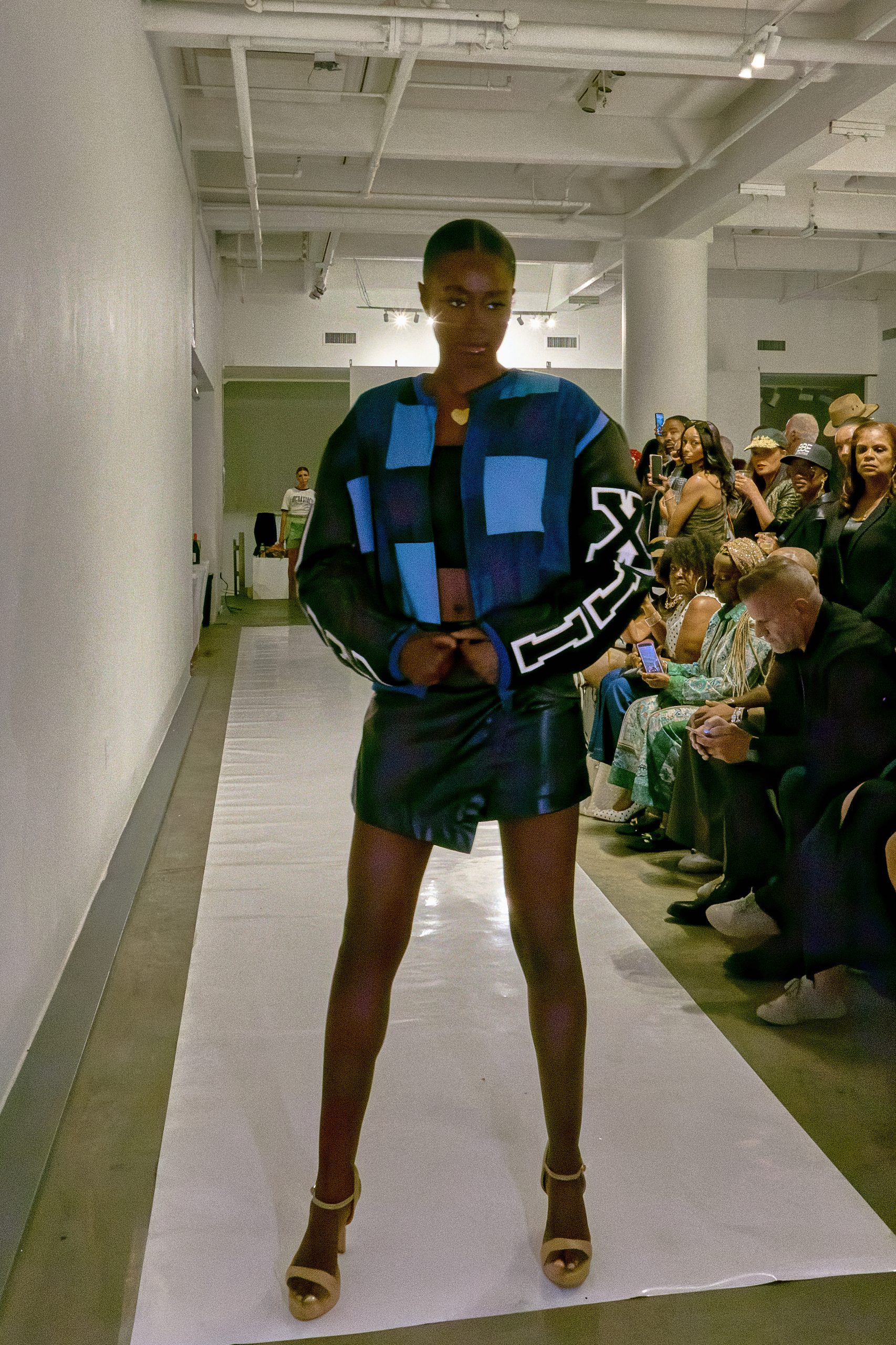
If RYNSHU treated dreaming as action, BiCoastal examined the ambition required to claim an identity of one’s own. Designer John Pack’s The Impossible Dream was presented at Alessandro Berni Gallery in Chelsea before an intimate, standing-room audience.
The setting mattered. Independent fashion often operates without the grand machinery surrounding established houses, yet that constraint can heighten the emotional charge of a presentation. Every look has to carry more of the argument; every detail has to clarify why the collection exists.
BiCoastal’s answer was rooted in individuality and the cultural dialogue between America’s coasts. The collection framed ambition not as a standardized destination but as something personal—shaped by geography, movement and the confidence to build an aesthetic on one’s own terms. In a fashion system preoccupied with scale, The Impossible Dream made intimacy feel like an advantage. Its world was considered, ambitious and distinctly its own.
The title could have read as romantic, but within the wider context of the week it felt more defiant. The impossible dream is not made possible by pretending the obstacles do not exist. It becomes possible through the work of giving an idea shape, inviting people into the room and allowing a point of view to become visible.
Frederick Anderson: Cultivating the American Dream
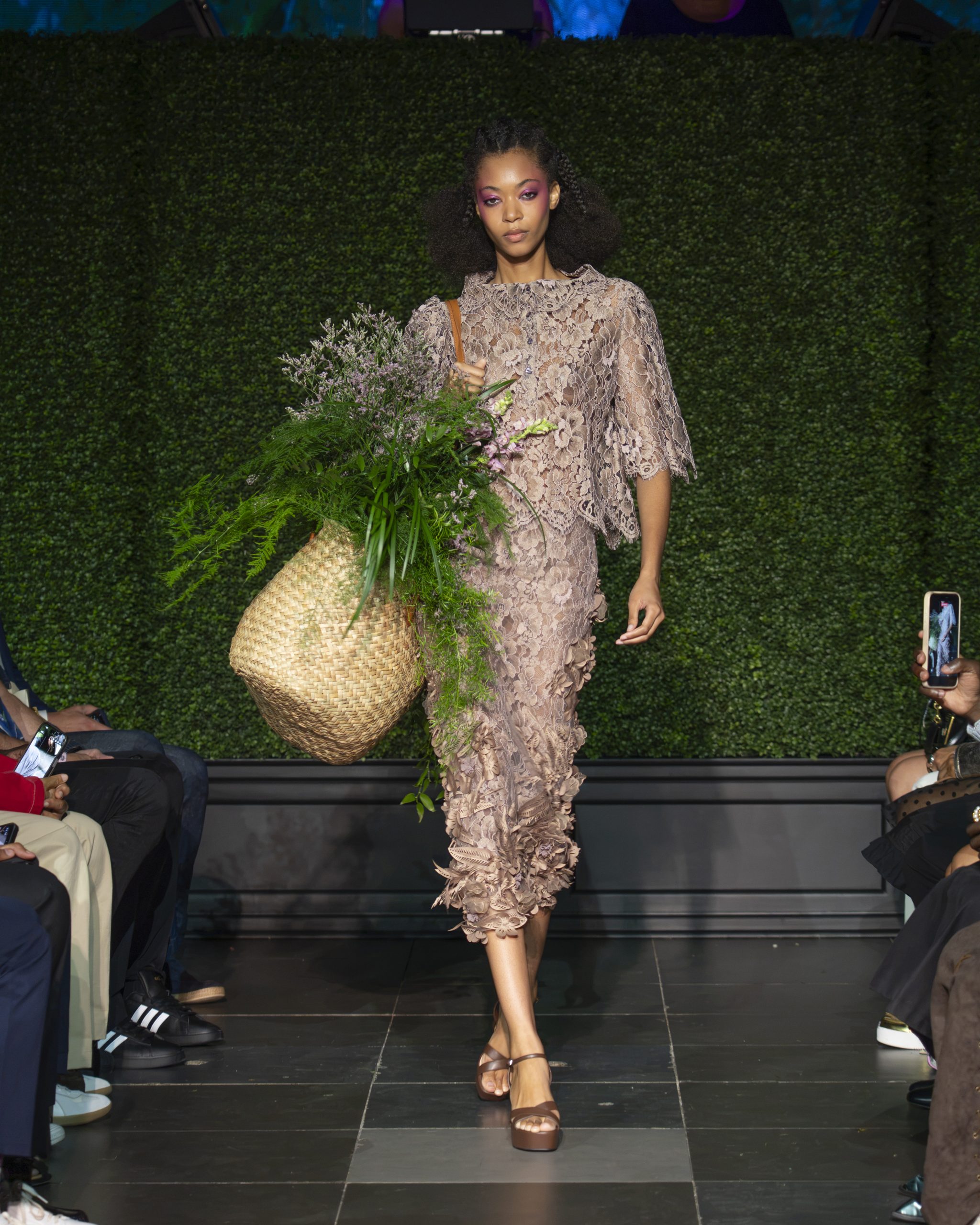
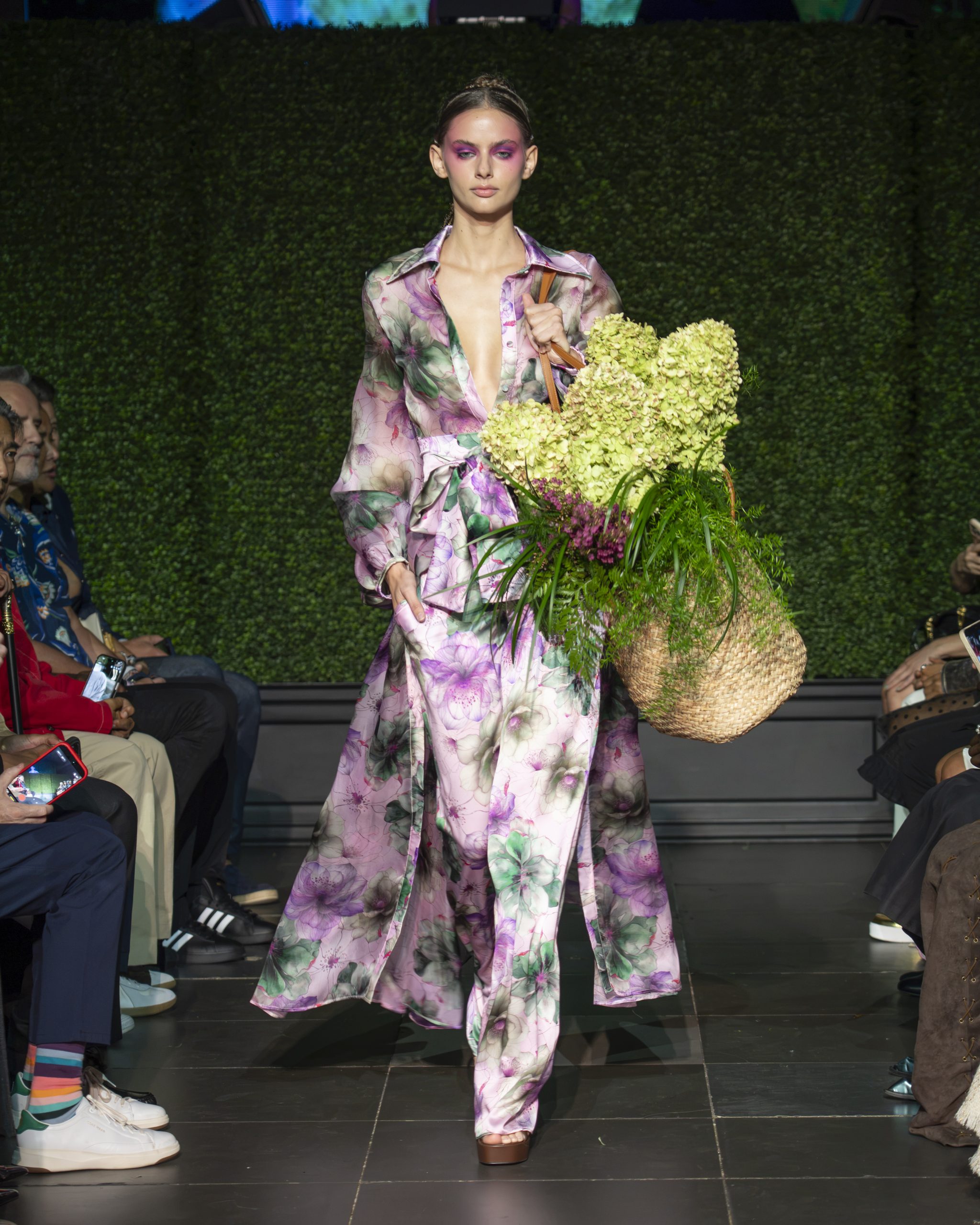
Frederick Anderson approached the dream through another enduring metaphor: the garden. Created in recognition of America’s 250th anniversary, My Garden Party considered the country through the people, histories and cultural traditions that have taken root here. Allison Russell opened the show with a live performance of “Eve Was Black,” before the collection moved from botanical references and earth tones through saturated blue and red to a luminous white finale.
I explored the full runway collection, its immigrant histories and its progression from roots to renewal in my last article Frederick Anderson’s My Garden Party Finds America in Full Bloom. Within this wider conversation, Anderson offered a simple reminder: dreams, like gardens, only flourish when they are actively cultivated.
PUBLIC SERV-CE: Choosing What Deserves Our Attention
Not every dream needs more noise around it. Sometimes it requires the opposite.
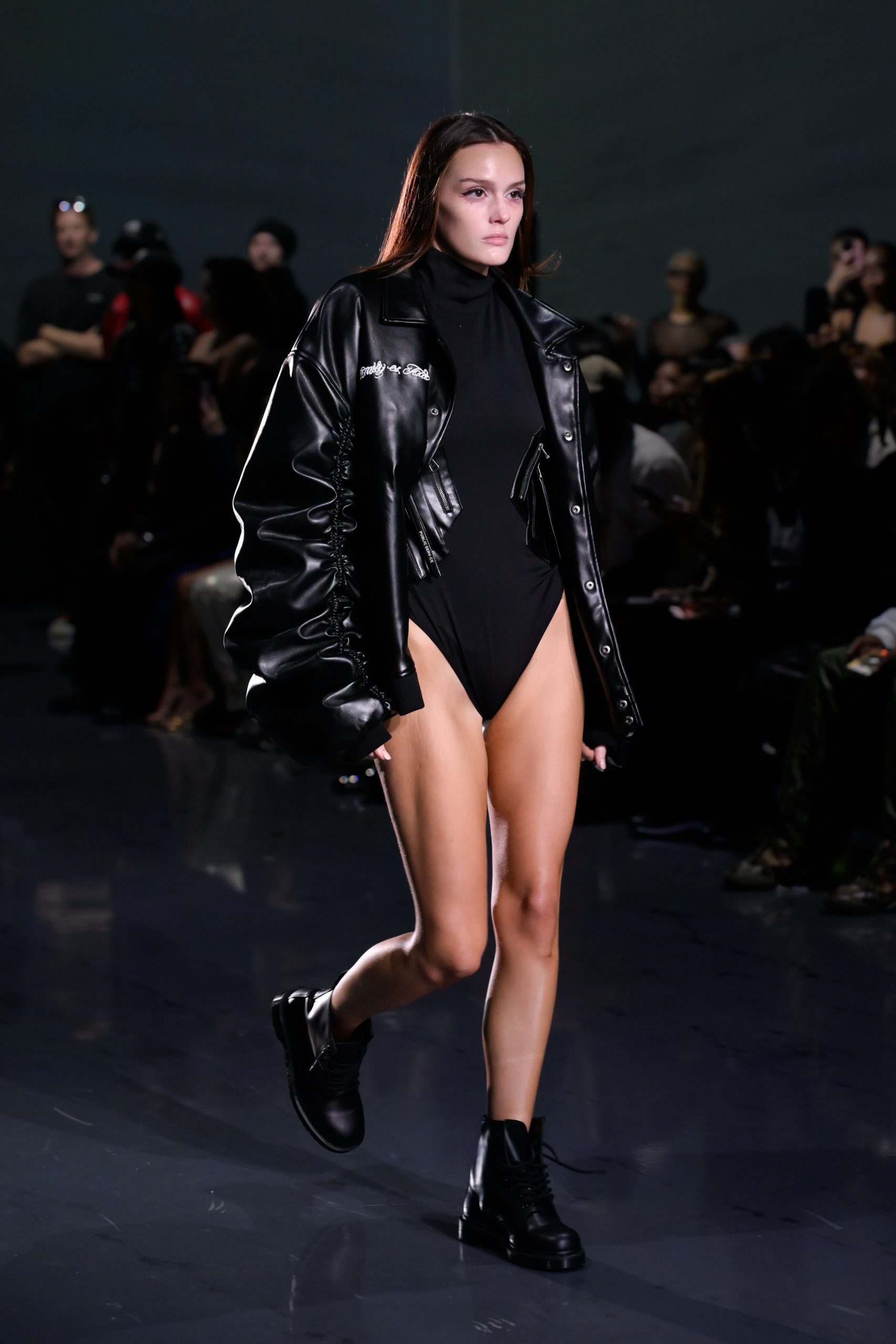
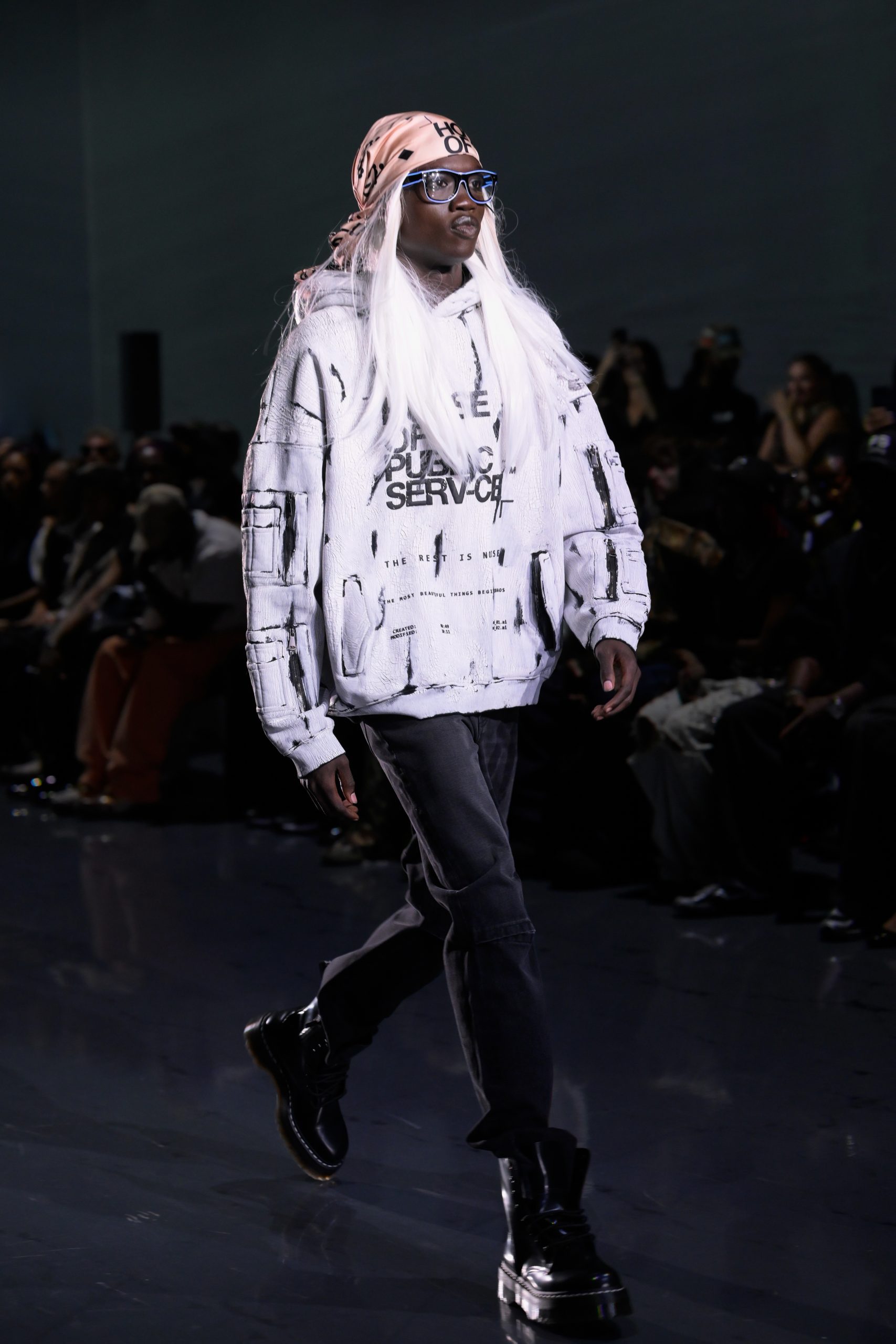
For Spring/Summer 2027, PUBLIC SERV-CE brought THE REST IS NOISE to ARTE MUSEUM New York, considering what individuality looks like when every screen, surface and conversation is competing for our attention.
The response was not minimalism in any conventional sense. Washed whites appeared distressed and marked; pink nude, red and ice blue cut through the palette; cracked graphics and reconstructed uniform shapes made the clothes feel as though they had absorbed some of the pressure surrounding them. Zaha Hadid Design eyewear and jewelry sharpened the collection’s futuristic lines without overpowering the people wearing them.
The show’s most personal detail came at ground level. Creative director Raphael Young returned to footwear with Spartan sandals handmade in Romans-sur-Isère, France, by his godfather’s studio, bringing family history and specialized craft into a presentation otherwise attuned to the digital age.
PUBLIC SERV-CE calls its proposition “uniforms for individuals,” and the phrase landed here. These were clothes with a shared language, but not a demand for sameness. During a week already crowded with images and information, the collection made a convincing case for editing the noise without erasing the self.
Veejay Floresca: Expanding Who Gets to Be Seen
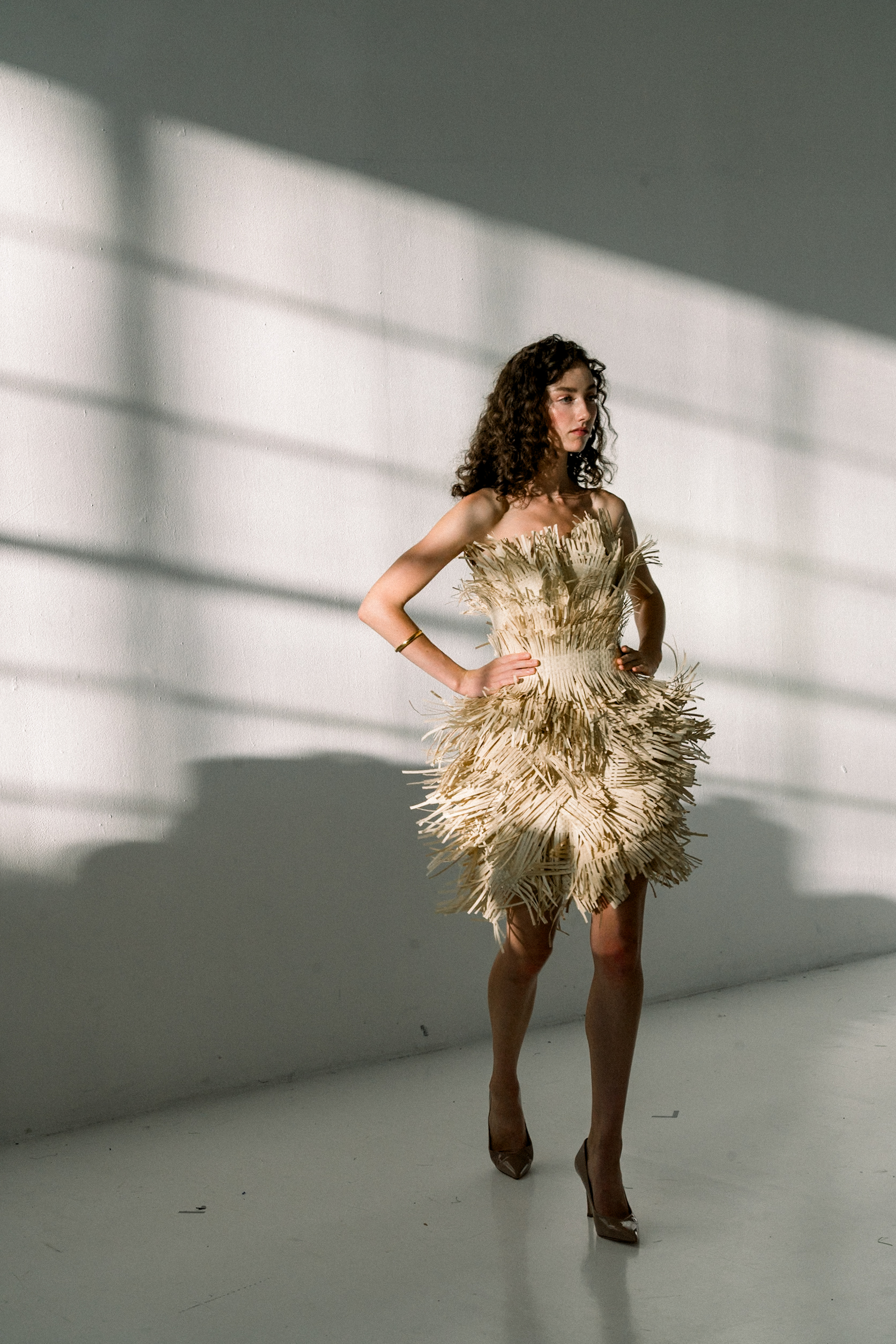
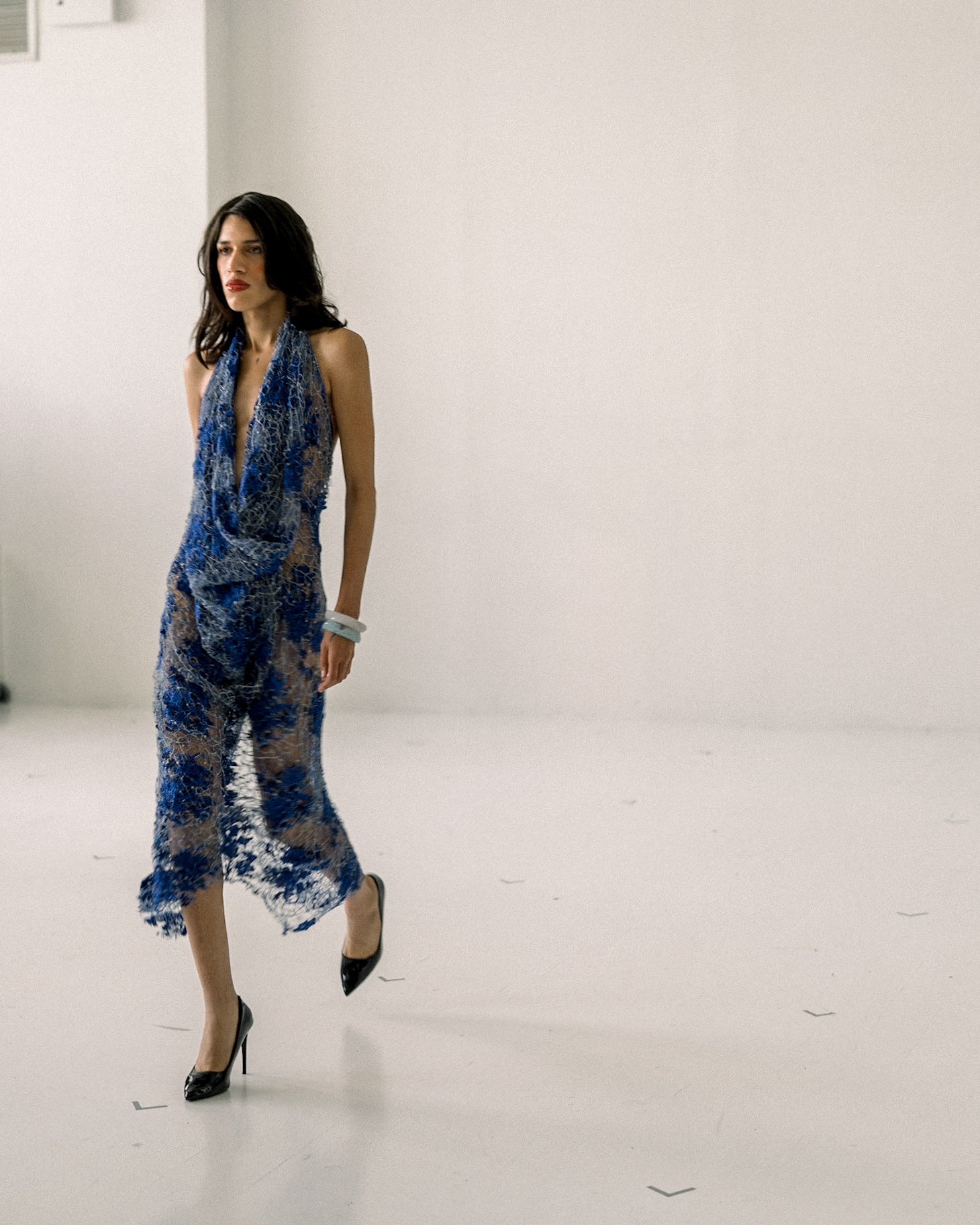
Veejay Floresca presented one of the week’s more experimental collections, moving freely among unexpected materials, intricate embellishment and futuristic forms.
The dress that stayed with me most was detailed with sculptural, almost bone-like pieces—an unusual treatment that made it feel part garment, part object. Elsewhere, a straw-like dress transformed an organic material into something entirely unexpected, while an open blue, fishnet-like look brought another texture and point of view to the runway. Intricate beadwork appeared across many of the gowns, balanced by corsetry that gave the more elaborate designs their shape.
The collection was equally expansive in its casting. Different bodies and identities were not presented as an aside; they were part of Floresca’s vision for the clothes. That made the runway feel forward-thinking in more than an aesthetic sense.
Veejay Floresca’s contribution to the week’s conversation about dreaming was a refusal to limit who gets to participate in fashion’s more imaginative possibilities. The collection made room for experimentation—in its materials, its silhouettes and the people invited to wear them.
Nicole + Felicia: The Architecture of Fantasy
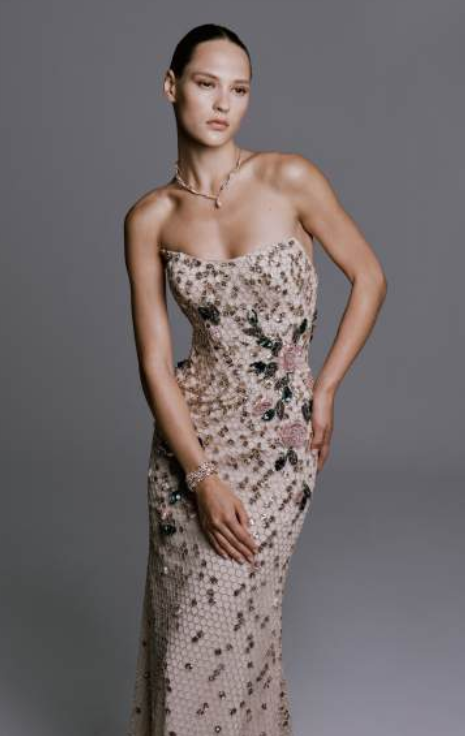
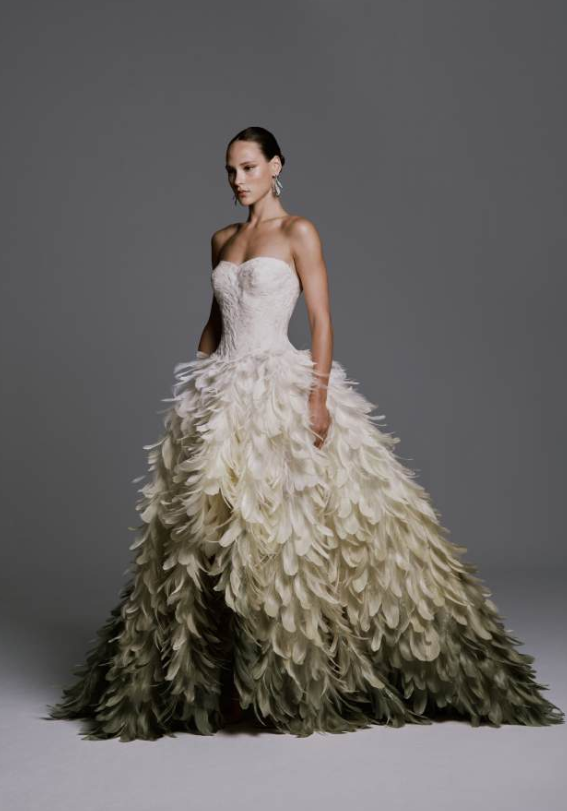
Founded by sisters Nicole and Felicia Chang, Nicole + Felicia has built its identity around high-impact bridal and eveningwear, with sculpted corsetry, elaborate handwork and unapologetically grand silhouettes at the center of its design language.
For Spring/Summer 2027, that vocabulary appeared through intricate beadwork, feathered volume and gowns created to make an entrance. I was especially drawn to the corsetry and the amount of construction visible throughout the collection. Even beneath the embellishment, each gown had a strong, clearly defined shape. The collection was romantic without feeling delicate.
There was nothing tentative about the collection. At a moment when much of fashion is centered on practicality and understatement, Nicole + Felicia defended the pleasure of dressing for a true occasion. The gowns embraced fantasy without treating it as frivolous.
If the other collections explored the ambition, uncertainty and work behind a dream, Nicole + Felicia captured the moment of arrival—the celebration and the freedom to make it spectacular.
What These Independent Collections Said About the Season
Taken together, the six collections point to three ideas likely to matter beyond a single fashion week.
First, narrative is becoming inseparable from design. A strong concept cannot compensate for weak clothes, but in an overcrowded landscape, a collection with a clear emotional and cultural argument is easier to remember. RYNSHU’s winding paths, BiCoastal’s impossible ambition and PUBLIC SERV-CE’s search for clarity each created a framework through which the clothes could be understood.
Second, contrast is carrying the most persuasive collections: darkness against dawn, softness against structure, technological environments against handcraft, uniformity against individual identity. The tension is the point. It reflects the contradiction of getting dressed—and trying to create anything meaningful—at a time when optimism and uncertainty coexist.
Finally, the new fashion dream is less interested in exclusivity for its own sake. It is more expansive, more personal and more honest about the labor involved. Independent designers may not have the largest rooms or loudest machinery, but they often have the freedom to articulate why making clothes still matters.
New York has always sold the possibility of reinvention. This season’s independent collections did not present reinvention as magic. They showed it as a practice: editing out the noise, protecting individuality, building with discipline and continuing through the detours.
Perhaps that is why the dream felt alive again. Not because fashion promised that everything was possible, but because these designers understood that possibility still asks something of us.