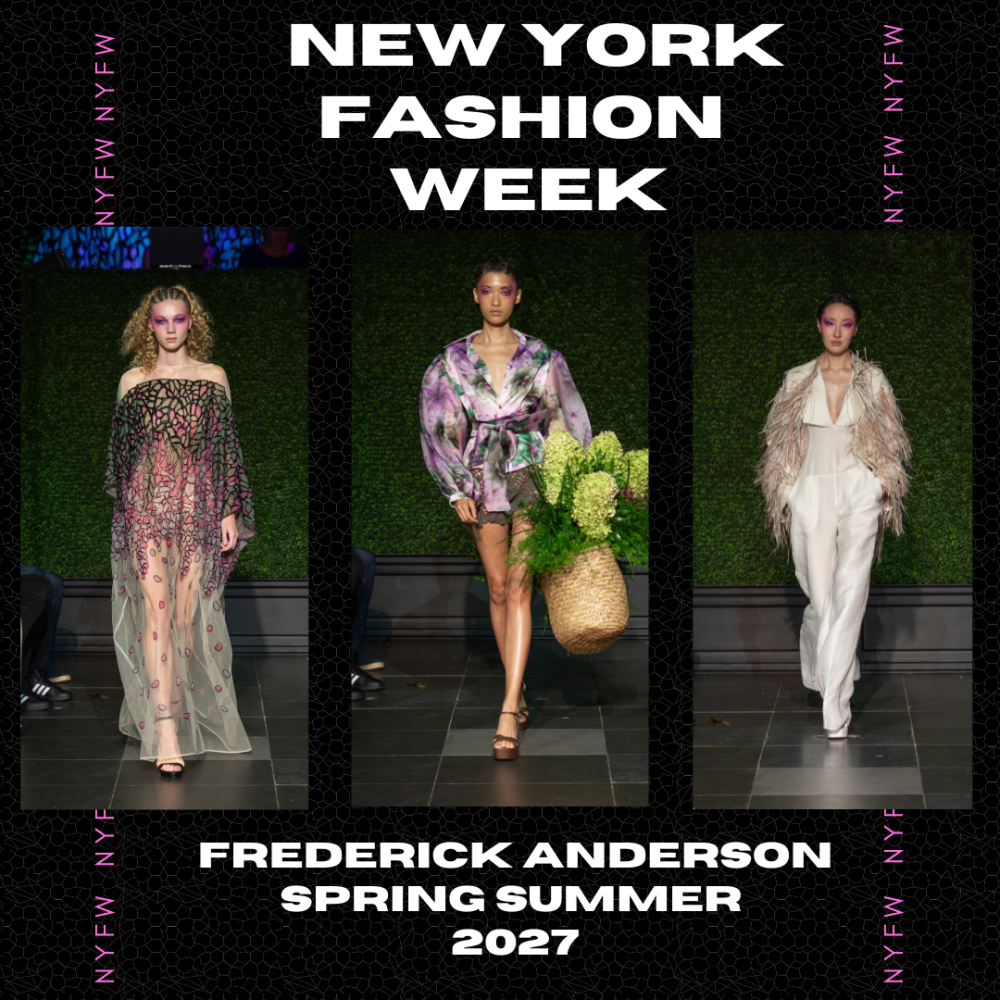
For Spring Summer 2027, Anderson translated 250 years of American becoming into a garden of immigrant stories, folk memory, sensual craft and the possibility of beginning again.
Before the first model stepped onto the runway, Allison Russell stood before the room and performed ‘Eve Was Black’ live. It was not background music or a decorative prelude. The Grammy-winning song established the emotional ground beneath Frederick Anderson’s Spring Summer 2027 collection, My Garden Party: history carried through voice, pain acknowledged without allowing it to become the final word, and freedom understood as something inherited, protected and continually remade.
Presented at Nebula during New York Fashion Week, the collection was Anderson’s contribution to America’s 250th anniversary. Yet there were no easy patriotic symbols or predictable red, white and blue shorthand. Instead, Anderson invited the audience into what he described as a ‘rich and full garden,’ shaped by the belief that America’s style and identity have always been formed by people arriving, settling, remembering and building lives alongside one another.
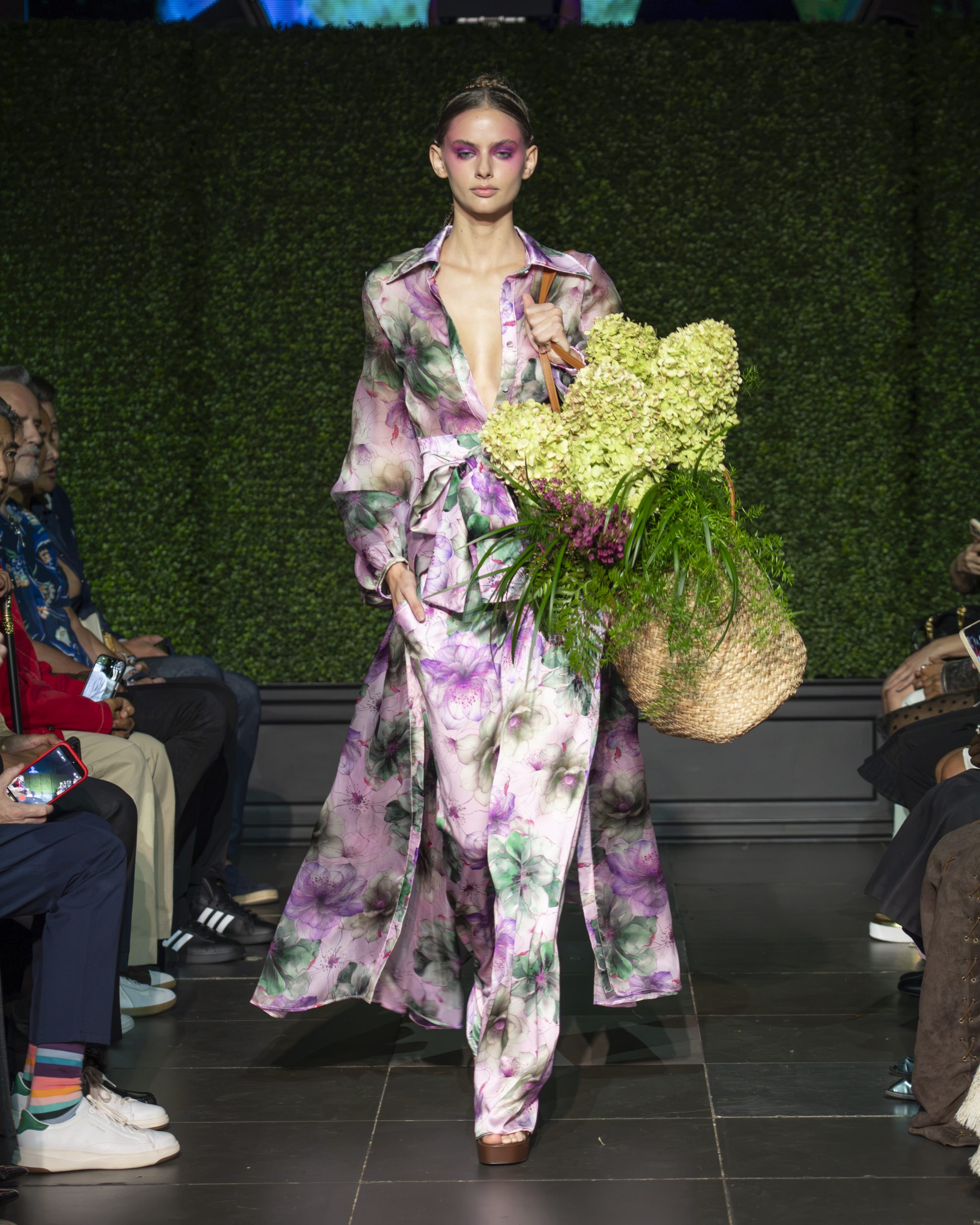
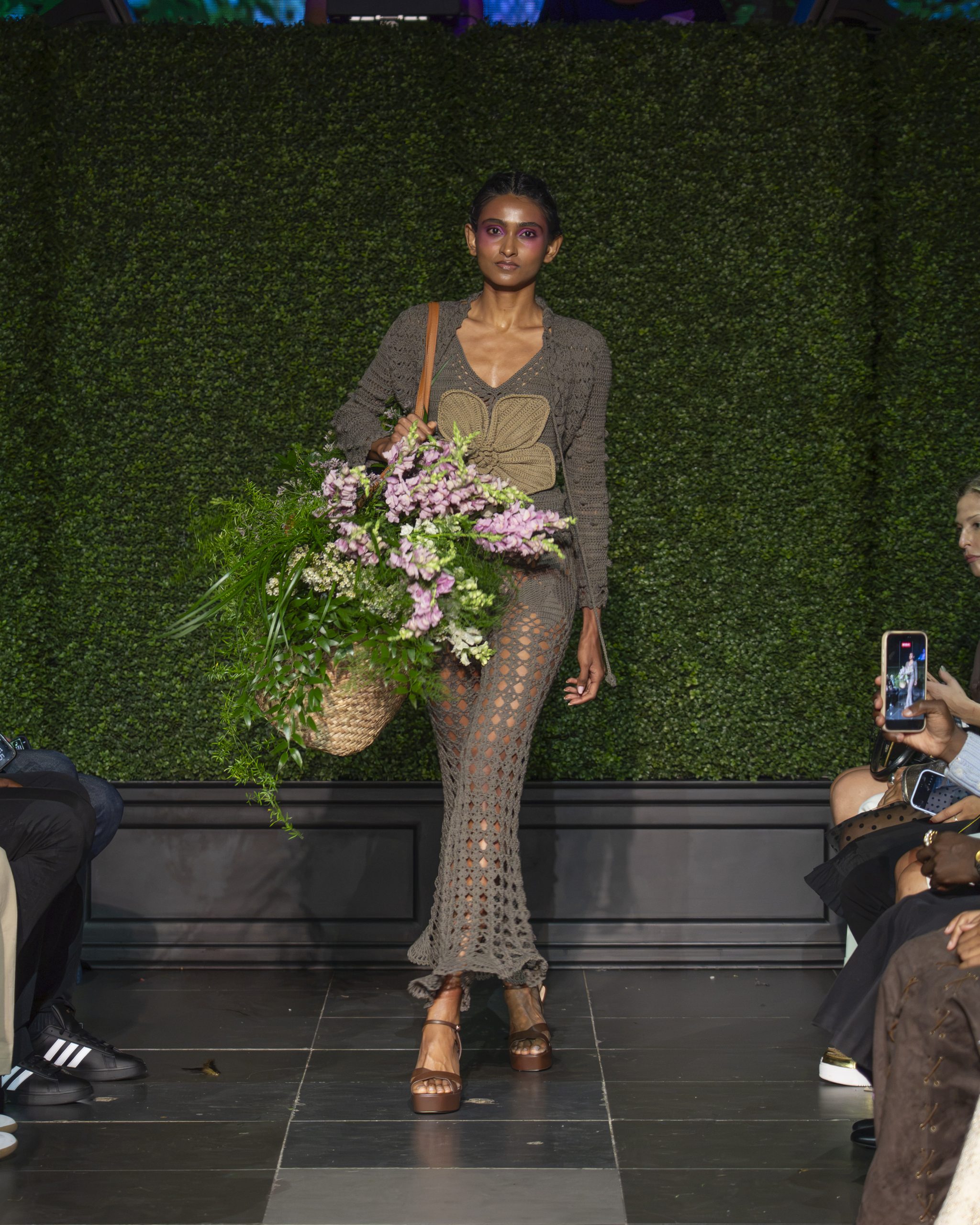
The garden became both setting and metaphor. Roots were literal in the language of flowers, soil and growth, but they also pointed toward ancestry: the histories beneath what eventually becomes visible. Models carried woven baskets and generous bouquets down the runway, transforming them from accessories into participants in the collection’s larger story. Beautiful things begin somewhere. Here, they began in the earth, in memory and in the many cultural traditions that have contributed to American dress.
A Garden Without Cliche
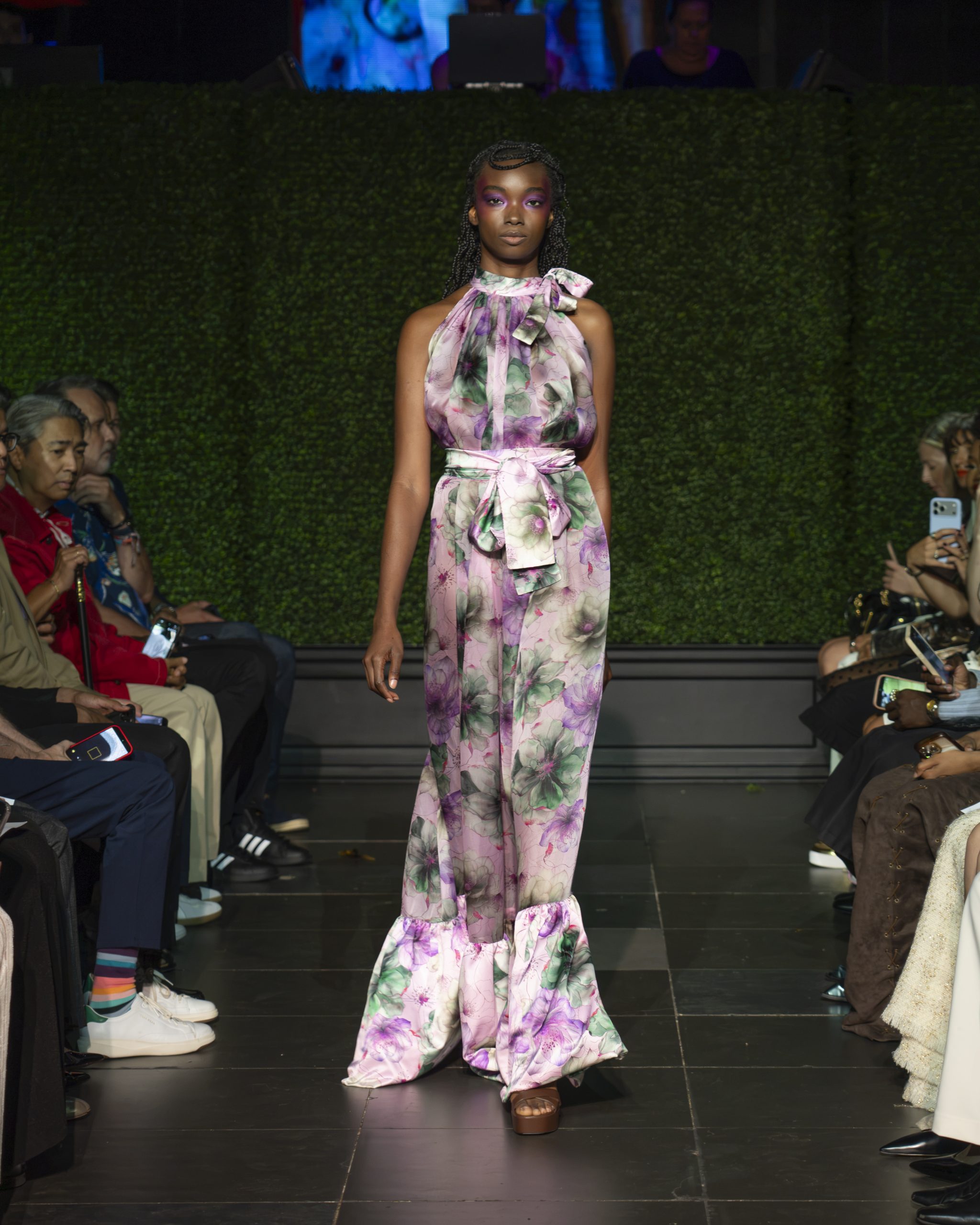
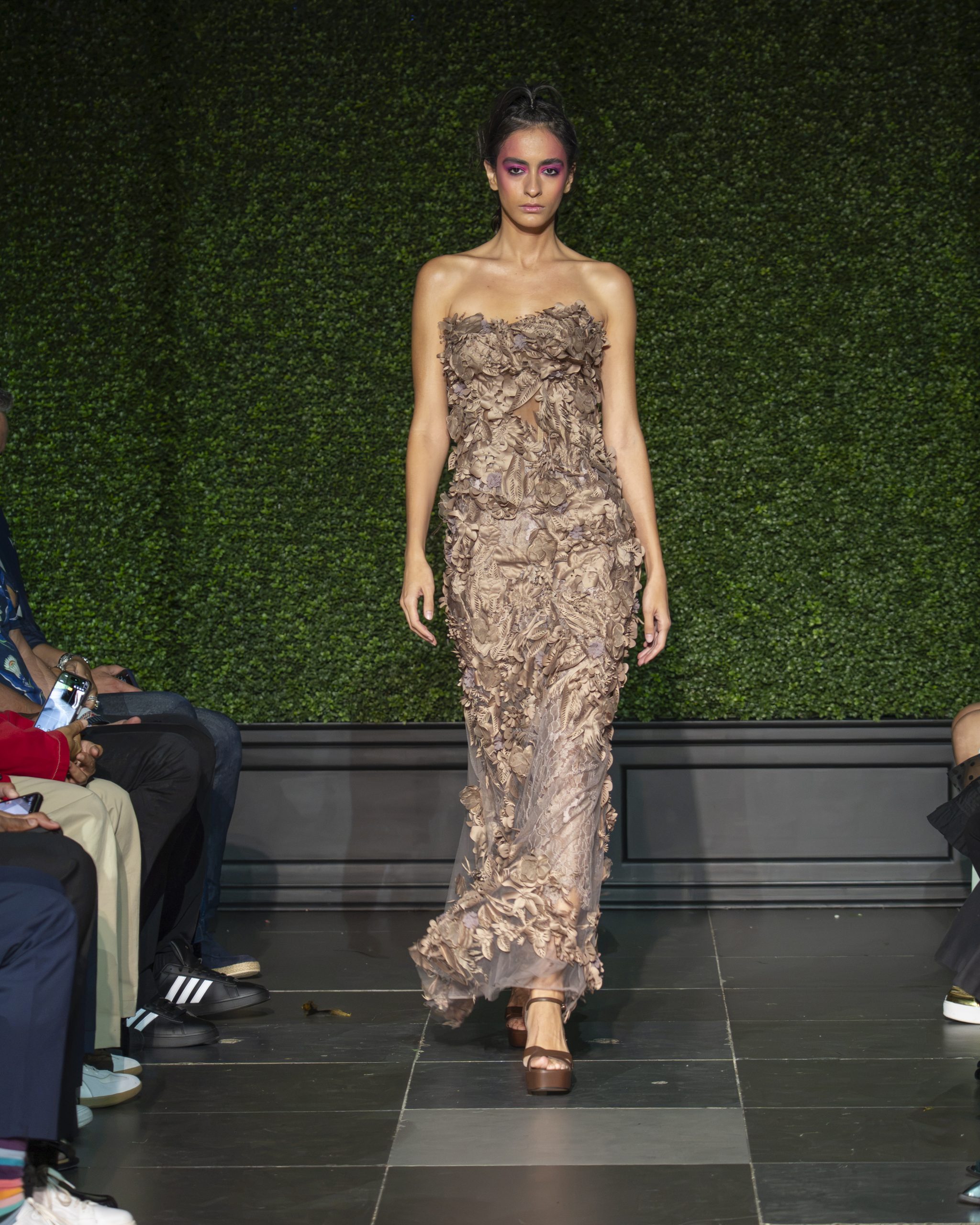
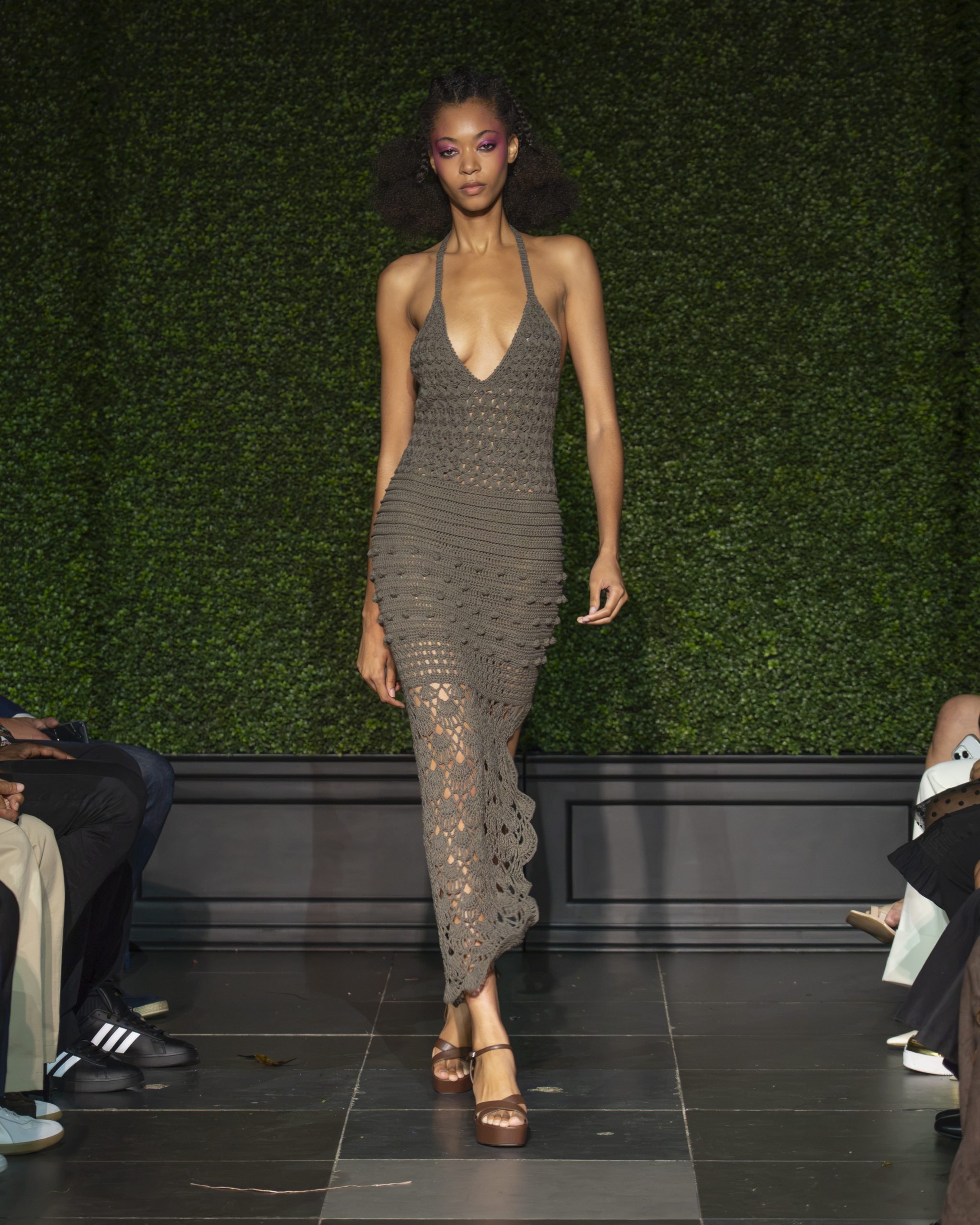
The opening movement stayed close to the ground through chocolate brown, bark, muted metallics and botanical prints. Anderson’s earth tones never felt like a generic exercise in natural dressing. Surface and silhouette kept them active: liquid satin caught the runway light, organic prints shifted between romantic and graphic, and texture gave neutral colors their own momentum.
Florals appeared throughout, but the treatment resisted sweetness for its own sake. Some prints stretched across long, fluid dresses; elsewhere, pattern met exposed skin, asymmetry or a sharper line. Bouquets added abundance without turning the runway into costume. The collection understood a garden as something layered and sometimes unruly, not merely pretty.
Color Enters the Landscape
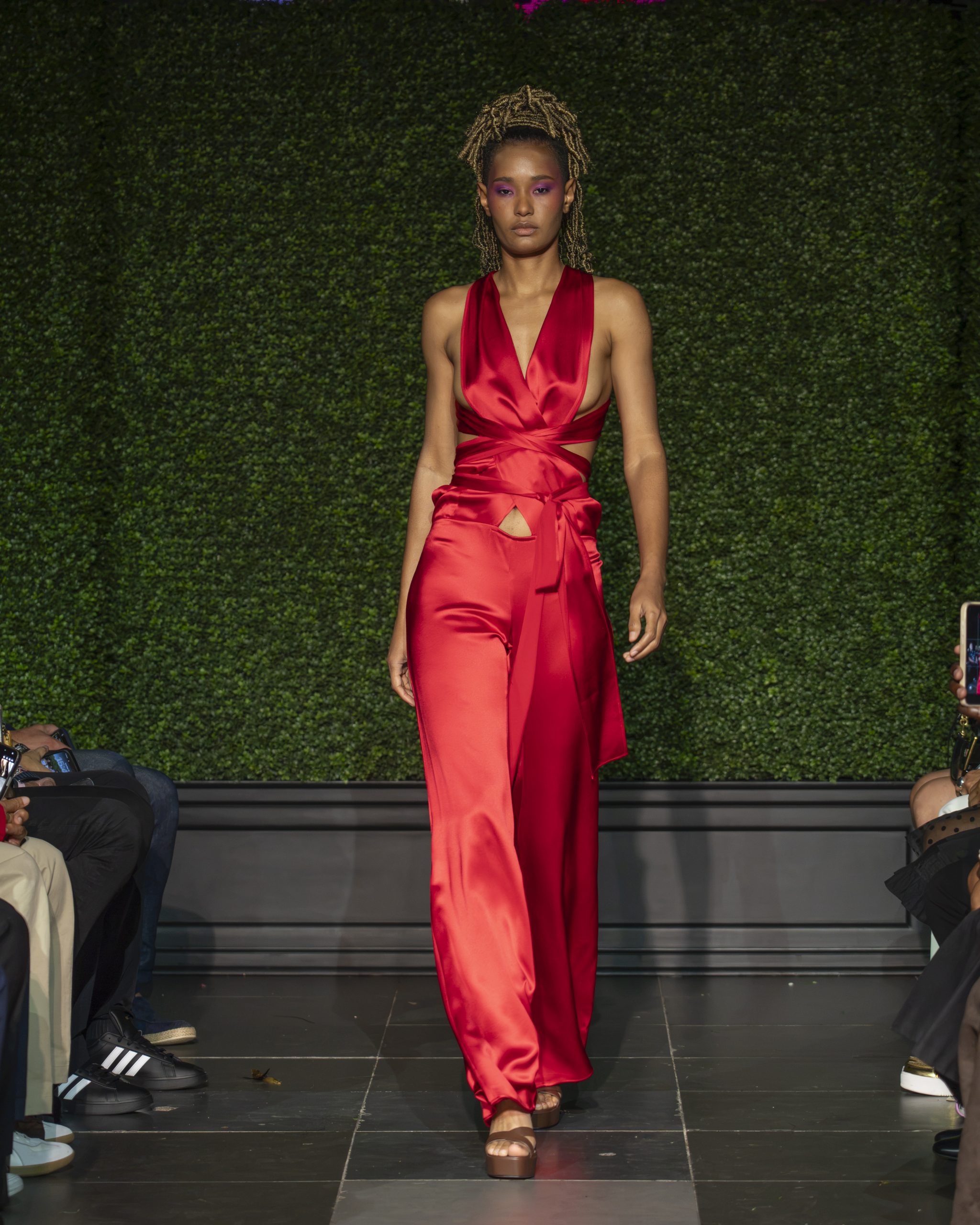
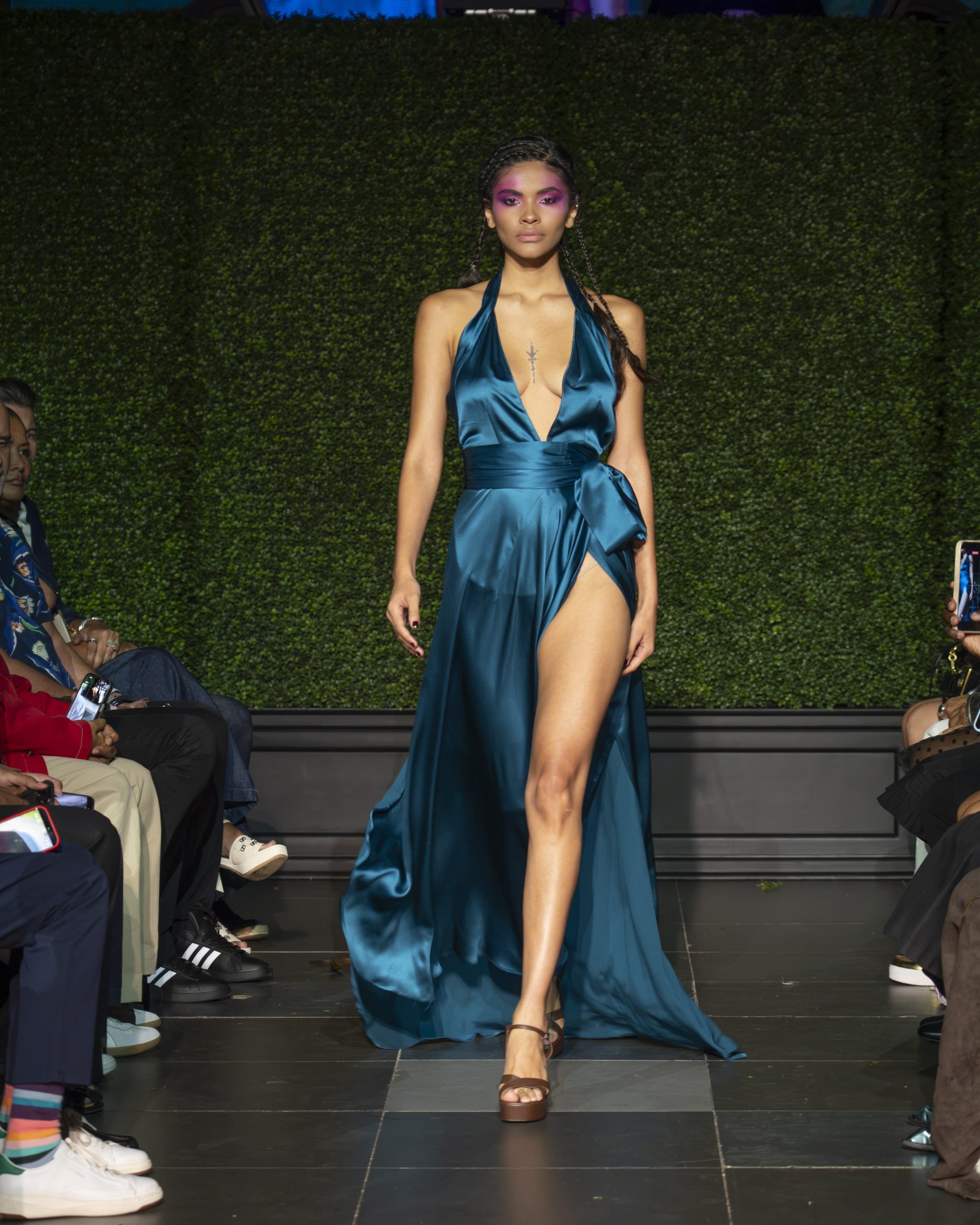
Saturated color arrived as punctuation. A deep blue dress and coordinating tailored look cut through the browns and prints with clarity. Later, cherry red shifted the collection’s temperature entirely. The red silhouettes carried confidence and polish, but within the garden narrative they also read as ripeness: the moment when something cultivated finally announces itself.
These passages gave the collection rhythm. Anderson was not simply moving from one palette to the next; he was allowing the garden to change state, from grounded and organic to vivid and fully alive.
Sensuality as a Signature
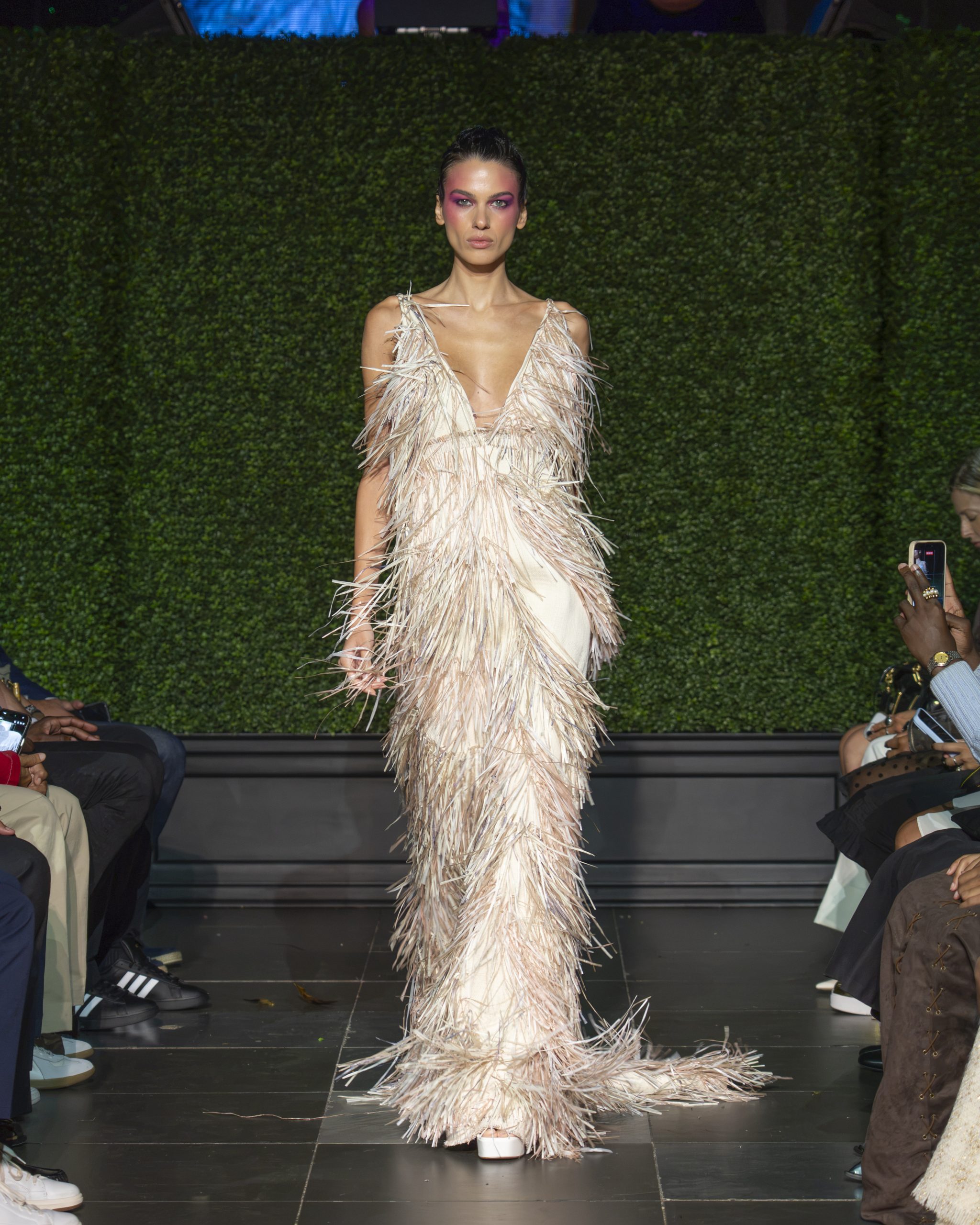
The concept never overwhelmed the clothes. Anderson’s familiar command of sensuality remained present through crochet, sheerness, cutouts, fringe and fabric that moved closely around the body. Skin appeared with intention rather than as an interruption to the collection’s more reflective themes. That balance is central to his work: craft and sex appeal are not opposing ideas, and seriousness does not require restraint from pleasure.
Several of the strongest looks found their power in that tension. Open construction revealed the body while intricate surfaces emphasized the handwork surrounding it. Feathers and fringe introduced movement, while tailoring kept the softer pieces from drifting into sentimentality.
A White Finale and a New Chapter
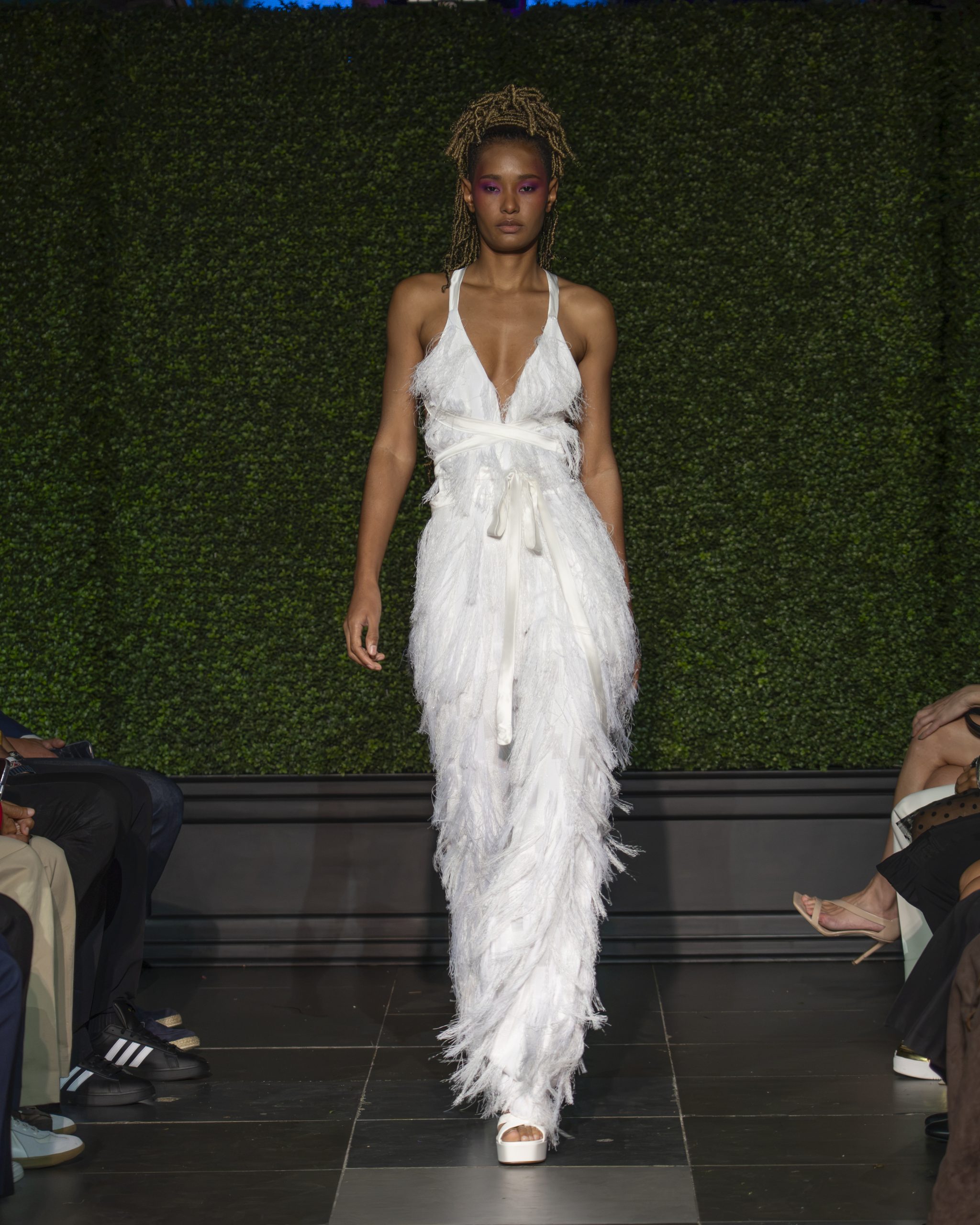
Then the collection moved into white. The final sequence unfolded through dresses, separates and tailoring, but the color did not flatten their differences. Crochet, fringe, cutwork, feathers and fluid layers ensured that each look held its own texture and personality. Even at its most luminous, the finale remained connected to the material richness that came before it.
To me, the white finale felt like wiping the slate clean for a new chapter, but not erasing what came before. The collection had already insisted on the importance of roots, immigrant histories and the pain carried within American freedom. White therefore read less as innocence than as possibility: a space made ready for whatever comes next.
That distinction made the show’s ending especially resonant. Anderson’s garden did not offer an uncomplicated version of America. It proposed a country built from individual beliefs, inherited stories and many origins, then asked what might grow when those differences are allowed to exist together.
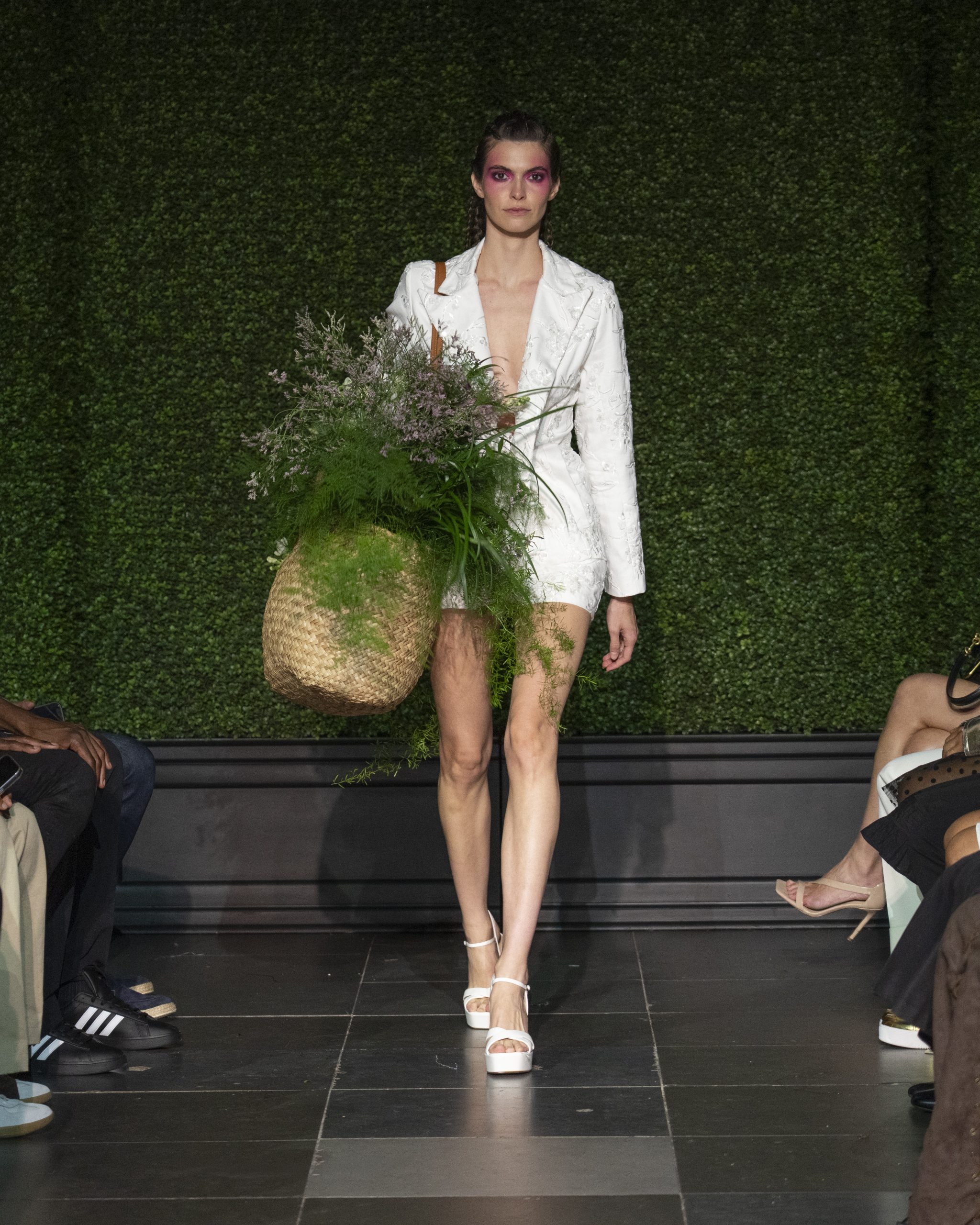
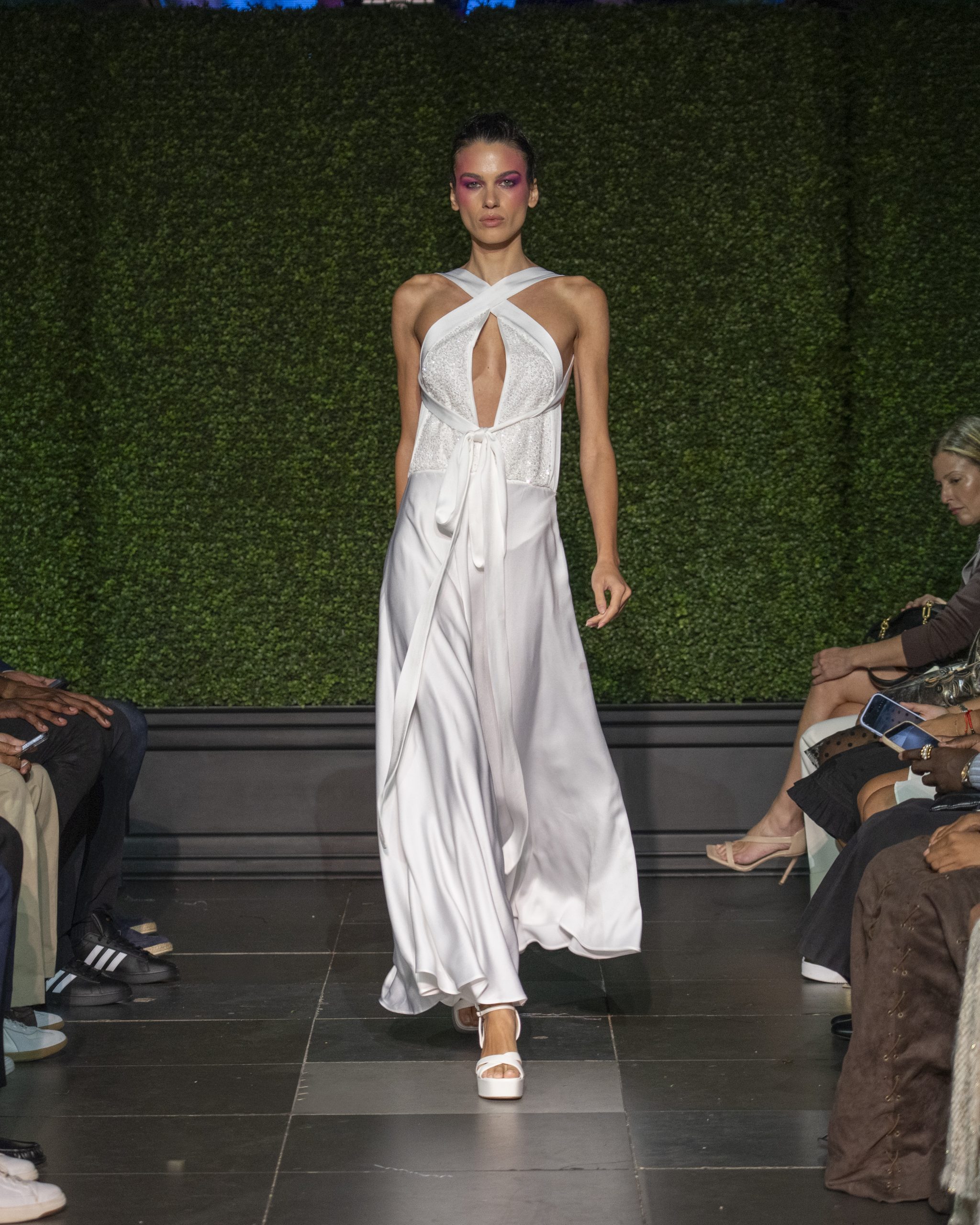
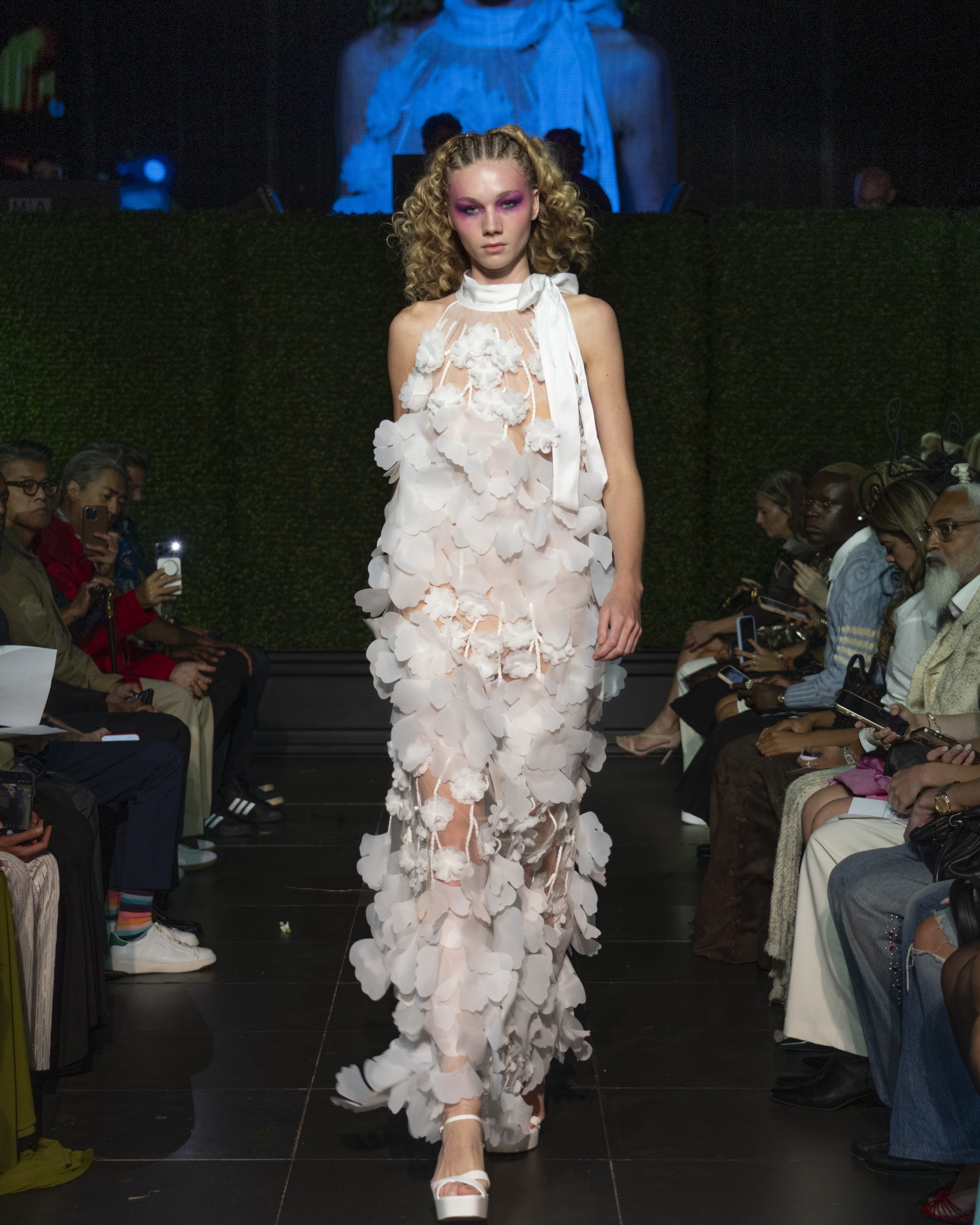
From the Show
Seeing the collection in the room made its progression especially clear: an opening grounded in voice and history, a runway filled with flowers and earth, bursts of saturated color, and finally a release into white. My own floral silk dress felt unexpectedly in conversation with the evening, though the collection’s meaning extended far beyond the garden as an aesthetic.
My Garden Party was ultimately about where beauty begins. It begins below the surface, in the roots. It begins in stories passed through music and clothing. It begins with people who arrived from elsewhere and contributed to a culture still being made. Frederick Anderson’s Spring Summer 2027 collection honored those beginnings while leaving room for renewal, proving that looking back and moving forward can be part of the same gesture.