
Here is something I have been sitting with lately: stress breaks out on my skin before I consciously register that I am stressed. The redness arrives first. The sensitivity follows. By the time my mind has caught up with what my body already knew, my skin has been broadcasting it for days.
This is not metaphor. It is biology — and a field of skincare science called neurocosmetics has spent the last several years building a rigorous scientific framework around exactly this experience.
In 2026, neurocosmetics is no longer a niche category. It is one of the fastest-evolving areas of beauty science, backed by peer-reviewed research, and it is quietly changing the way the most sophisticated skincare is formulated.
I’ll be transparent about something important: I haven’t personally tried any of these products. My interest in neurocosmetics is genuine — it arrived in my research at the right moment, in a season when I find myself more attuned to ritual, to what I’m actually putting on my skin, and to the slower, more intentional approach to wellness that spring always seems to invite. But this piece is built on research, not firsthand experience, and I want to name that clearly. What I can say with confidence is that the science behind this category is among the most substantive I’ve encountered in beauty writing — peer-reviewed, clinically studied, and now backed by a luxury house with a century of credibility staking its first-ever new brand on it. A firsthand follow-up is on my radar. For now, consider this the informed introduction.
The Skin–Brain Axis: The Science Behind the Feeling
Your skin and your brain share an embryonic origin. They develop from the same layer of cells — the ectoderm — and they remain in constant, bidirectional communication throughout your entire life. This connection is known as the skin–brain axis, and it is more literal than most of us have been taught to understand.
When you experience stress, your brain and pituitary gland release hormones that signal the adrenal glands to secrete cortisol and adrenaline. Those stress hormones instantly affect the skin: they compromise barrier integrity, decrease the lipids and structural proteins that hold the barrier together, and trigger the release of neuropeptides from nerve endings in the skin itself. These neuropeptides — substances like Substance P and calcitonin gene-related peptide — produce redness, inflammation, and sensitivity.
This is the mechanism behind every flare-up, every stress breakout, every bout of reactive skin that no amount of gentle moisturizer seems to resolve.
But the communication runs in both directions. The skin doesn’t just receive signals from the brain — it sends them back. Skin-derived mediators, including cytokines and neurotrophins, can cross the blood-brain barrier and amplify neuroinflammation. The skin and nervous system are, in the language of the research, in a self-sustaining feedback loop that perpetuates both dermatologic and psychological states.
Disruptions to this axis are increasingly implicated in conditions like rosacea, atopic dermatitis, and psoriasis — conditions where the skin is responding to nervous system dysfunction, not just surface exposure.
Neurocosmetics works within this system rather than around it.
What Neurocosmetics Actually Does
Traditional skincare treats the epidermis and dermis directly: moisturizers deposit humectants on the surface, retinoids accelerate cell turnover, chemical exfoliants dissolve dead cells. These approaches treat skin as an isolated organ. They are not wrong — but they are incomplete.
Neurocosmetics takes a fundamentally different approach. Instead of only treating the outer layer, neurocosmetic formulations target nerve activity, neuropeptides, and stress mediators to address skin behavior at the level where it actually originates.
The analogy from one research team that stays with me: barrier care is like placing a calm roof on a house with malfunctioning electrical wiring. The roof matters. But the real issue is happening behind the walls.
The practical effect of this approach: neurocosmetic formulations can reduce the frequency, intensity, and duration of stress-related skin reactivity — not by numbing or masking, but by regulating the nerve signaling that causes it in the first place.

The Ingredients to Know
The science has moved considerably beyond concept. Here are the key actives driving this category and what each one does.
Acetyl Hexapeptide-8 (Argireline) — Often described as topical Botox-adjacent, though the mechanism is different. This neuropeptide inhibits the nerve–muscle communication that creates expression lines, reducing acetylcholine secretion and visibly softening dynamic wrinkles. It also reduces micro-tension in the skin caused by stress-related nerve-muscle signaling.
Rhodiola Rosea — An adaptogenic botanical with strong clinical backing for cortisol regulation. Applied topically, rhodiola helps normalize the skin’s stress response pathways, reducing stress-related dullness and sensitivity. The oral version has been studied for anxiety and burnout; the topical version is now being incorporated into formulations targeting stress-related skin deterioration.
Ashwagandha Extract — Another adaptogen with peer-reviewed support for lowering cortisol levels and improving neuroendocrine function. In skincare, ashwagandha targets the root of stress-induced reactivity rather than its surface symptoms. Clinical trials have demonstrated its effectiveness; it is appearing in both serums and treatment moisturizers.
Palmitoyl Tripeptide-8 — A signal peptide that calms neurogenic inflammation and reduces nerve-triggered redness. Particularly relevant for sensitive skin where the sensitivity is neurogenic (nerve-driven) rather than barrier-driven — a distinction that changes what actually works.
GABA (Gamma-Aminobutyric Acid) — The brain’s primary inhibitory neurotransmitter. In skincare, GABA-mimetic ingredients help calm overactivated nerve endings in the skin, reducing surface tension and reactivity.
Adaptogenic Botanicals (CBD, Lavender, Chamomile) — These work through the endocannabinoid system and olfactory-limbic pathways to support stress pathway balance, including local cortisol regulation. Their effects are partially through the skin’s biochemistry and partially through the sensory experience of application itself.
The Ritual Is Part of the Formula
This is the part that makes neurocosmetics unlike any other skincare category, and the part that most resonates with me personally.
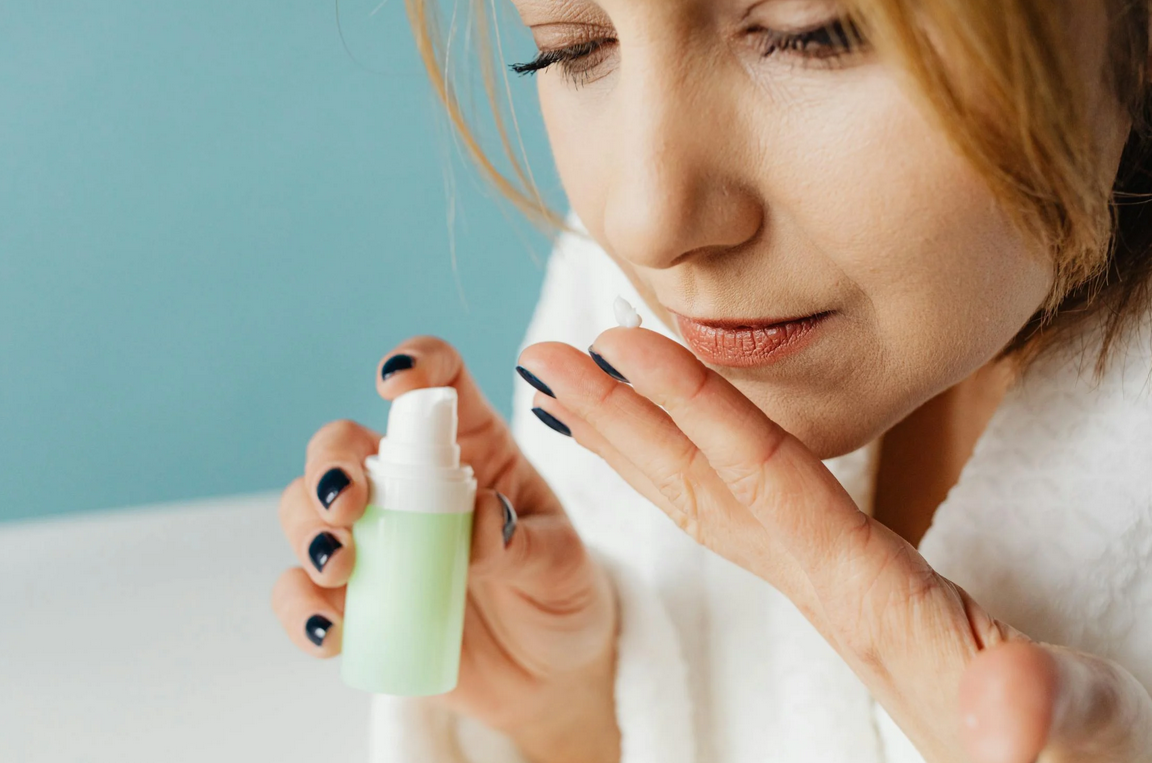
Research shows that sensory rituals involving aromatherapy, intentional facial massage, and mindful application amplify neuropeptide activity by engaging the skin’s mechanoreceptors and the olfactory-limbic pathway. The way you apply your skincare is not incidental — it is mechanistically significant.
Slow, upward facial massage strokes rather than quick patting converts a passive skincare step into an active neurocosmetic treatment. Sixty seconds of intentional pressure can shift the skin’s neuropeptide balance toward repair. The scent of a formula activates cortical emotional responses through the olfactory-limbic pathway that purely functional ingredients cannot reach by any other means. Temperature — the warmth of a balm, the cool of a gel — changes how nerve endings respond to the application.
This is why the concept of the skincare ritual, which has sometimes been dismissed as marketing language, turns out to have genuine scientific grounding. Presence during application is not optional in neurocosmetics — it is part of the mechanism.
The practical upshot: slow down. Apply your serum with deliberate massage. Choose textures that feel like comfort. The sensory experience you create during application is not supplementary to the results — it is inseparable from them.
How to Start Building a Neurocosmetic Routine
You do not need to overhaul your existing routine. Neurocosmetics layers in as targeted support.
Morning: Begin with a gentle cleanser that does not strip. Apply a neuropeptide serum directly onto slightly damp skin — this improves absorption of signal peptides significantly. Layer a moisturizer with adaptogenic ingredients (look for ashwagandha, rhodiola, or GABA). SPF as the final step.
Evening: This is where the ritual does most of its work. Cleanse with an oil that incorporates calming essential oils if possible — the olfactory effect is part of the formula. Apply neuropeptide serum with upward massage strokes, taking at least sixty seconds. Follow with a richer treatment that supports barrier function alongside neural calming. The sequence matters: thinnest to thickest, each preparatory step improving absorption for the next.
The non-negotiable: Consistency over intensity. Neurocosmetics does not work through shock-loading. It works through the gradual recalibration of the skin’s nervous system over weeks of regular use.
The Brands Leading the Category Right Now
The neurocosmetics market is still early enough that knowing which brands are actually doing the science — versus borrowing the language — makes a real difference.
Neuraé by Sisley is the most significant launch in this space. It is the first standalone brand ever created by the Sisley Group, backed by over a decade of clinical research, and built entirely around what they call NA3 Technology — a three-part system of neuro-ingredients, neuro-fragrances, and neuro-textures designed to work on the skin and the nervous system simultaneously. The collection is organized by emotional state rather than skin type, which tells you everything about the philosophy. The Harmonie Serum is the foundation of the routine — rebalancing and calming at the nerve level. The Sérénité Balm is specifically formulated for stress-related tension and worry lines. The Énergie Cream uses red indigo and seaweed to address fatigue and loss of firmness. And the Emotions Boosters — small roll-on neuro-fragrances — are designed for mid-day recentering, carrying the aromachology science directly into the scent itself.
Selfmade is the indie counterpart — more accessible in price, psychologically coded in its naming (the Rumination Recovery Balm, the Secure Attachment Comfort Serum), and deeply committed to the adaptogen and plant neuroactive approach. It is the brand for the reader who wants to enter this category without a luxury price commitment, and it is doing genuinely interesting work.
Image Skincare Biome+ incorporates ashwagandha alongside skin microbiome support — a good starting point if you want to test the adaptogenic approach within a routine you may already have some familiarity with. Widely available and Amazon/Walmart stocked.
A note on how to shop this category honestly: because neurocosmetics works cumulatively, through consistent ritual rather than immediate result, starting with one product and building is smarter than overhauling everything at once. The Neuraé Sérénité Balm or the Selfmade Secure Attachment Comfort Serum are both strong entry points — specific, purposeful, and representative of what the category actually is.
A Personal Note on Why This Matters
I have been thinking about neurocosmetics not just as a beauty category but as a philosophy — one that treats the skin as what it actually is: a dynamic interface between the body, the brain, and the environment.
We have spent years treating skin as a surface problem. The science is now clear that it is, in many of the cases that matter most, a nervous system problem. The cortisol that arrived before the conscious awareness of stress. The redness that appears without visible cause. The sensitivity that no barrier cream resolves.
The most interesting development in skincare in 2026 is not a new active ingredient. It is a shift in how we understand what skin is and what it needs.
Calm, in skincare, is not cosmetic. It is the goal.


One thought on “Your Skincare Routine Is a Nervous System Event: The Science of Neurocosmetics”
Ashwagandha kopen the biggest difference was in how I handle daily pressure. I feel less overwhelmed since I started using it.