There’s a moment, every year, when New York stops trying quite so hard to impress you.
It doesn’t announce itself. Nothing actually slows down — the reservations are still booked, the openings continue at the same pace, and there’s no shortage of somewhere to be. But the energy shifts slightly off-center, just enough that you notice it if you’re not moving too quickly through it.
Less urgency.
Less need to be first.
This April, the city feels intact — but less insistent.
The openings are constant — the language is changing

For a while, everything defaulted to Italian. Not necessarily because it needed to be, but because it worked. Pasta, low lighting, a certain kind of crowd — it became a format more than a cuisine, something reliable enough that it didn’t require much explanation.
Now, that language is loosening.
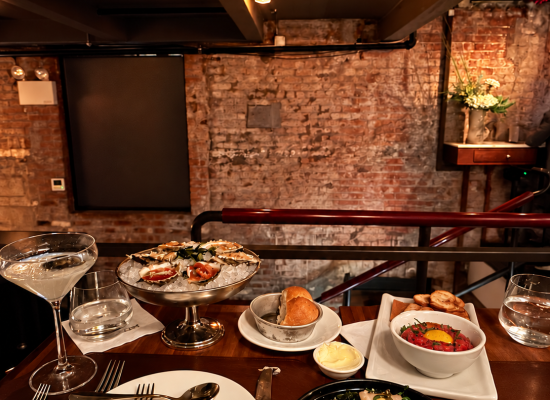
Places like Saverne in Hudson Yards lean into a French brasserie mood, but without the stiffness or theatricality that used to come with it. It feels composed, not performative — the kind of place that’s designed to already feel settled. Downtown, Bar Rocco still draws from Italian-American nostalgia, but it’s sharper, more restrained, less dependent on the cues that used to define it.
Even Dean’s in SoHo — a British coastal pub concept — fits into the same shift. It doesn’t feel like it’s trying to transport you anywhere in particular. It just creates a mood that holds on its own.
The through line isn’t Italian, French, or British. It’s something broader — European, loosely interpreted. Atmospheric, slightly nostalgic, but not literal.
Less “this is the concept.”
More “this is how you spend an evening.”
The quieter signals

Not everything is happening at the level of a major opening.
Some of the more telling changes are quieter — almost easy to miss.
Frozen yogurt, for example, is reappearing — but not in the way it existed before.
Yes, places like 16 Handles and Red Mango are seeing a kind of renewed attention, but what’s more interesting is what’s happening just slightly underneath that.
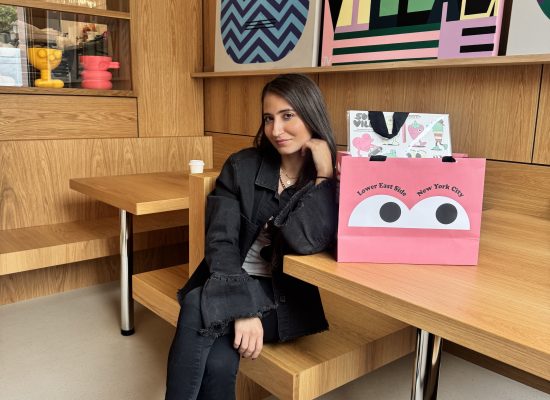
At Mimi’s in SoHo, it doesn’t feel like a froyo shop at all. It reads more like a café — minimal, quiet, almost intentionally restrained. The yogurt itself is simple, clean, not overloaded with options. You’re not building something exaggerated, you’re choosing something and staying with it.
You go as much for the space as you do for the yogurt. It fits into the day easily — something you stop for, not something you plan around.
Even newer openings like Birdie’s, which drew lines in the middle of winter, point to the same idea. It’s not a comeback in the nostalgic sense. It’s more of a repositioning.
Not indulgence.
Not health.
Just something that sits naturally within the rhythm of the city again.
The conversation has shifted
Not long ago, the question was simply where everyone was going.
Now, there’s a pause before that — a quieter question underneath it: is it actually good?
Places that would have coasted on reputation a year ago are being looked at more closely. Not dramatically, not in a way that turns into headlines — just enough to shift the tone.
Take Carbone. It’s still one of the hardest reservations in the city, still culturally dominant, still somewhere I’ve meant to fold into the “Worth the Hype” series for a while.
But the conversation around it has changed. Between the Department of Health “B” rating and the broader awareness around how top-tier places are actually operating, there’s a question that didn’t used to sit so close to the surface:
How much are we overlooking because something is established?
And even more interesting — some of the most talked-about places aren’t disclosing ratings at all.
It’s not backlash.
It’s not rejection.
It’s a more specific kind of attention.
At the same time, recognition still carries weight — just differently. The James Beard Awards conversations this year feel less like a celebration and more like a signal. People are paying attention to what’s being recognized, but also to what isn’t — who actually has a point of view, and who simply fits into what’s already working.
Status still exists.
It’s just not enough on its own.
The room matters more than the opening
You feel all of this most clearly in the rooms themselves.
The city is still full, but it’s not chaotic. Tables are filled, but the energy isn’t frantic. People are staying longer, ordering differently, letting the night stretch instead of compressing it into one stop after another.
The best places right now aren’t the ones trying to create a moment.
They’re the ones that can hold one.
Lighting feels softer, but intentional. Music sits lower. Service feels less rushed, more aware of how people actually want to spend time.
There’s a quiet return to the idea of an evening — something that unfolds, rather than something you move through quickly.
Elsewhere, the rhythm matches

Spring is layering back in — but without the same pressure.
Gallery openings are picking up again in Chelsea and Tribeca — spaces like Gagosian Gallery and David Zwirner Gallery returning to fuller programming, where openings feel attended, but not overly performative. Downtown, The Hole continues to pull a younger, more fashion-adjacent crowd, but even there, the energy feels less like something you need to keep up with.
Outdoor tables are filling again at places like Sant Ambroeus and along the streets of West Village.
Central Park is picking up.
SoHo is busy again — but not overwhelming.
Everything is happening.
It just doesn’t feel like it’s competing for your attention in the same way.
Dressing reflects it
Nothing looks overly resolved.
Loafers when it could be heels. Or a little layering that looks like
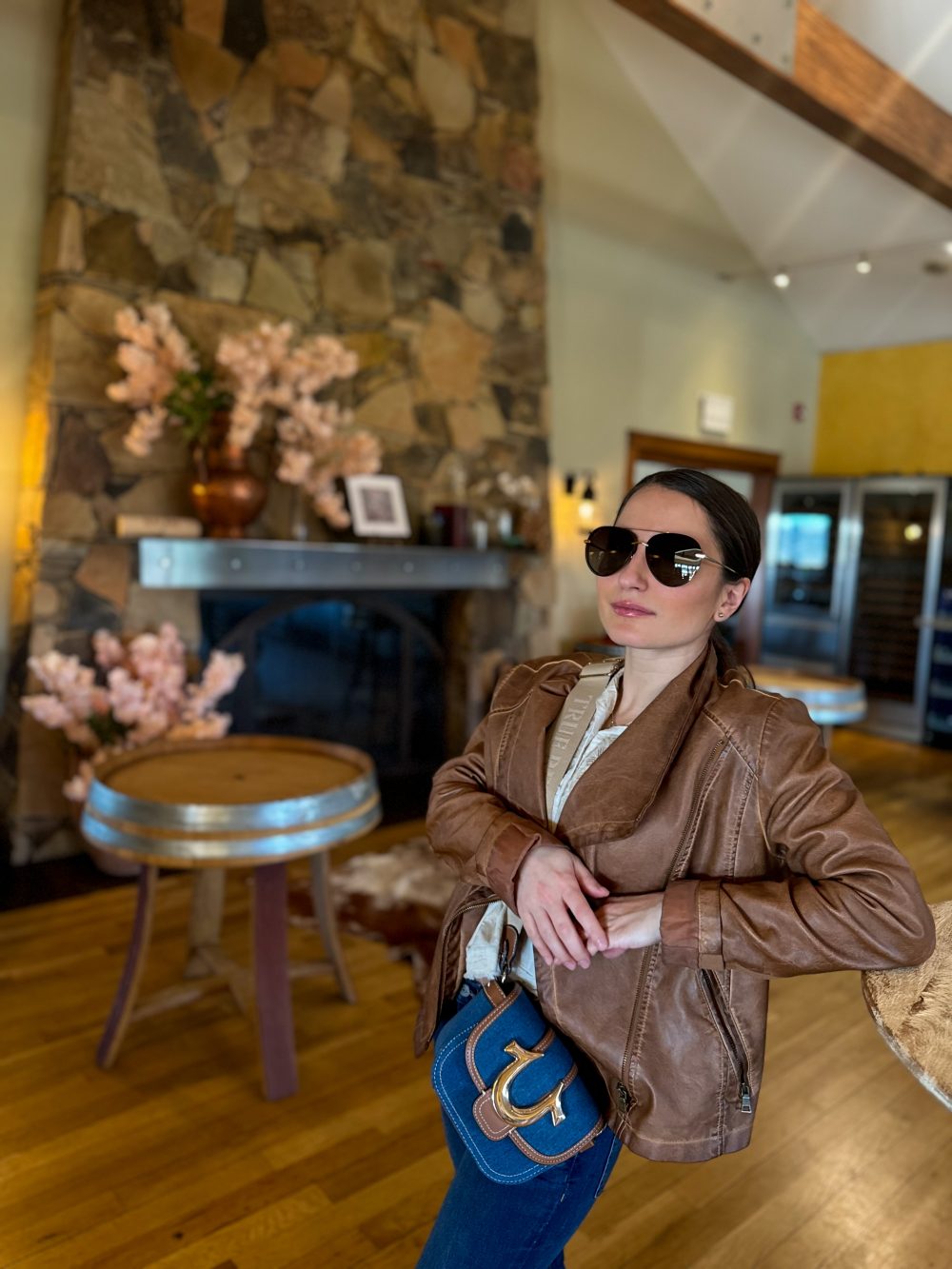
Sunglasses that don’t quite align with the rest of the look.
It’s not undone.
It’s just not over-finished.
And in a city that has spent the last few years refining itself into something extremely precise, that slight imbalance reads as confidence.
Distance changes the read
As mentioned in my previous post of my lenten fast and stepping back from the city, the distance has definitely changed the read. I don’t feel as reactive to the next shiny new thing and more pulled to the innovative .
When you’re not trying to keep up, you stop noticing what’s loudest — and start noticing what actually lasts.
Not the places everyone agrees on or the ones that peak immediately but the spots that will stand the test of time and provide experiences that don’t have to convince you that they are worth the hype.
What’s actually shifting
New York hasn’t slowed down.
The openings are still happening.
The tables are still full.
The city is still, unmistakably, itself.
But the way people are moving through it is changing.
Less urgency.
More selectivity.
A quieter kind of certainty.
Let’s see what April brings us and stay tuned. I will be back NYC.